Lesson 11 是英語時態裡最讓人頭痛的「完成式(Perfect tenses)」全集合。完成式的核心精神是「站在某個時間點回頭看一個動作」 — 那個參考點可以是現在(present perfect)、過去某時(past perfect),或未來某時(future perfect)。每一種完成式還可再分 simple(強調動作完成、結果、或經驗)與 continuous(強調動作的持續、進行)。本課最後用兩張 All Verb Tenses 大表把全書 12 種時態一口氣整理完。
完成式不是「過去式 +1」,它表達的是「兩個時間點的關係」。學會問「這個動作是站在哪一刻往回看?」,比死背公式更重要。
現在完成式(Present Perfect Simple and Continuous)#
Simple Present Perfect#
肯定句公式:SUBJECT + HAVE | HAS + PAST PARTICIPLE
例:I have spent…
書中用一連串對話框圖示出 simple present perfect 的典型用法:
- 一對戴頭巾的夫妻並肩坐著,妻子說:I have been happily married since I met this man.(自從遇到這個男人,我就一直很幸福地結著婚。) → 標籤:With HOW LONG | FOR | SINCE for verbs not normally used in continuous forms: BE, HAVE, KNOW, LIKE.(搭配 how long / for / since,特別是不常用進行式的動詞如 be、have、know、like。)
- 一位拿手機自拍的紅衣女子說:I have spent my parents’ savings.(我把爸媽的存款花光了。) → 標籤:For COMPLETED ACTIONS when no time is given.(用於沒有指定時間的「已完成動作」。)
- 一位穿 IMAIM(I’M IAM)T-shirt 的女生說:I have not ever been to Miami.(我從來沒去過 Miami。) → 標籤:With EVER | ALREADY | YET | JUST.(搭配 ever、already、yet、just。)
- 一位拿著紅酒杯的女子說:I have had six beers.(我已經喝了六瓶啤酒。) → 標籤:When we say HOW MANY or HOW MANY TIMES.(談「多少次/多少」。)
- 一位喝紅酒的女子說:It’s the best feeling I’ve ever had in my whole life.(這是我這輩子最棒的感覺。) → 標籤:With SUPERLATIVES.(搭配最高級。)
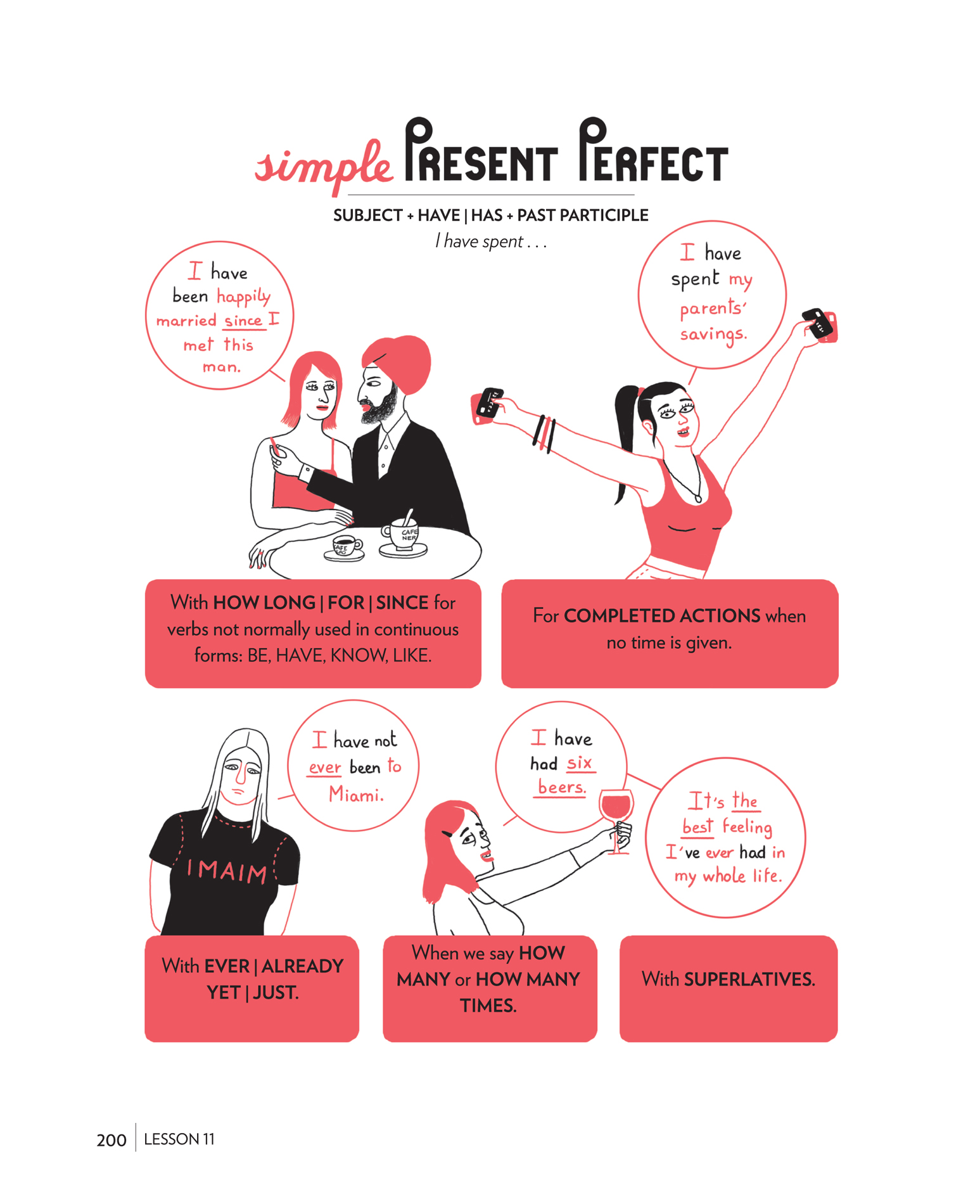
Figure 11.1: Simple Present Perfect 五個典型用法(HOW LONG/FOR/SINCE、已完成動作、EVER/ALREADY/YET/JUST、HOW MANY、最高級)
Present Perfect Continuous#
肯定句公式:SUBJECT + HAVE | HAS + BEEN + PRESENT PARTICIPLE (verb+ing)
例:I have been cheating…
一位坐在「NO SMOKING」標誌下、嘴角沾著口紅印的男子的兩個內心獨白:
- I have been cheating on my wife since she started snoring.(自從我老婆開始打鼾,我就一直在外面偷吃。) → 標籤:For continuous actions, especially for questions with HOW LONG and answers with FOR | SINCE.(持續動作,常搭配 how long 提問與 for / since 回答。)
- I have been spending time with Susan today.(我今天一直跟 Susan 待在一起。) → 標籤:For CONTINUOUS ACTIONS recently finished.(剛結束的持續動作。)
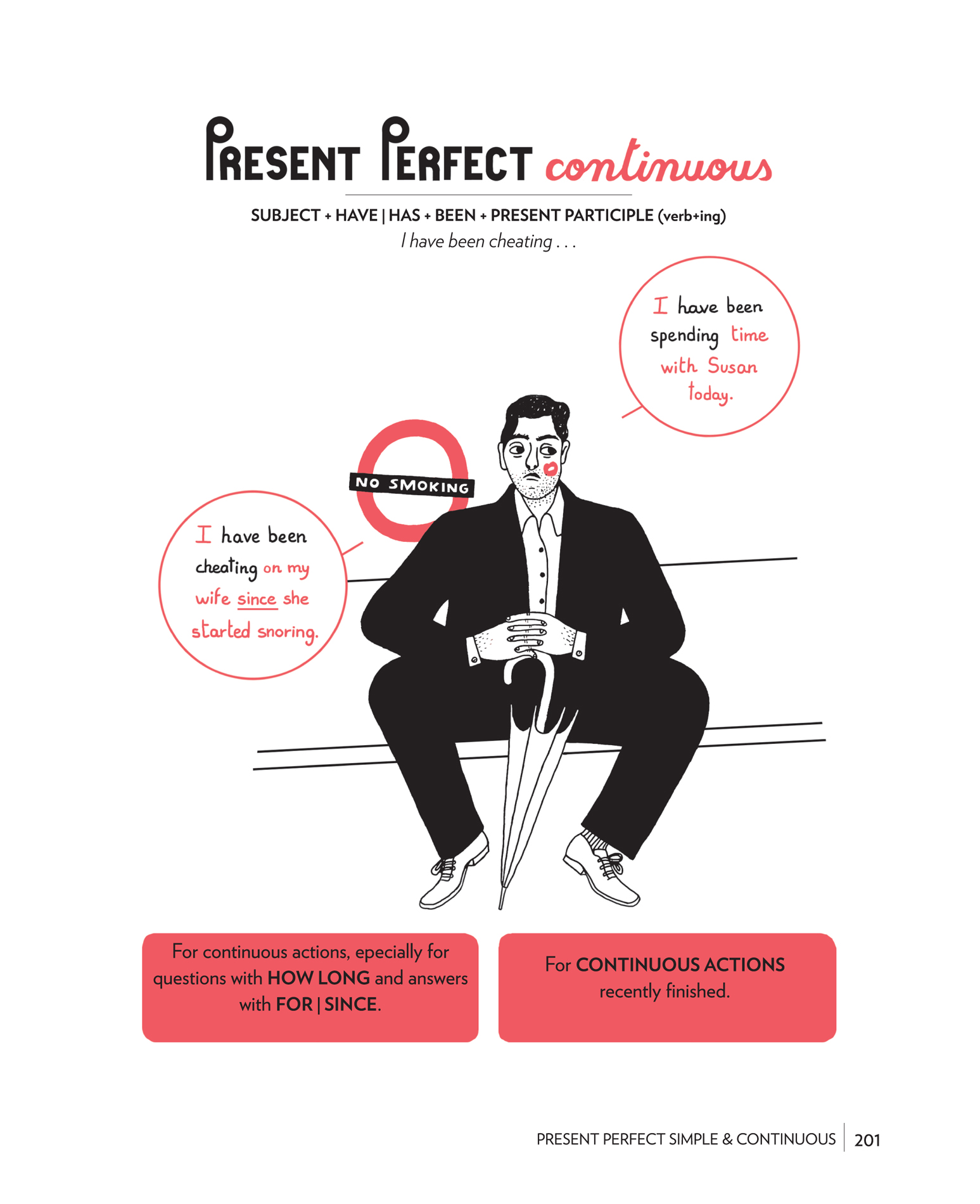
Figure 11.2: Present Perfect Continuous — NO SMOKING 標誌下口紅印男子的兩個內心獨白
Present Perfect 的否定與疑問#
書中用一對背對背躺在床上的夫妻插畫示範:
- 太太說:Dear, I haven’t forgotten how much I love you.(親愛的,我沒有忘記我有多愛你。)
- 先生回:Oh, I think so…
- 太太冷冷再問:Suzie, have you lost your mind?(Suzie,你瘋了嗎?)
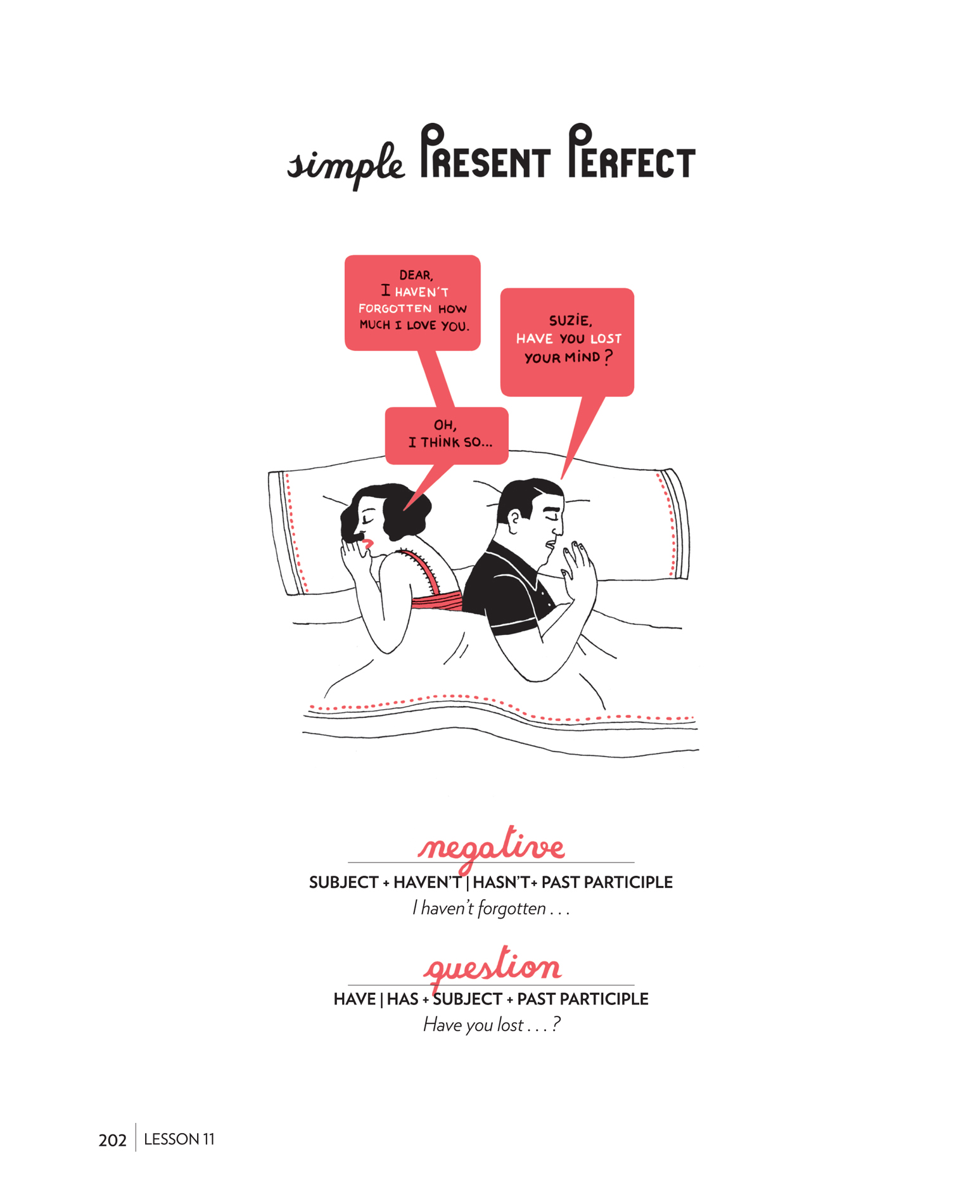
Figure 11.3: Simple Present Perfect 否定與疑問 — 背對背躺在床上的夫妻
對應公式:
negative:SUBJECT + HAVEN’T | HASN’T + PAST PARTICIPLE — I haven’t forgotten…
question:HAVE | HAS + SUBJECT + PAST PARTICIPLE — Have you lost…?
Present perfect continuous 的否定/疑問則用一對母女在台階上的插畫示範(媽媽抓到女兒偷吃巧克力):
- Have you been eating chocolate, sweetie?(甜心,你是不是一直在吃巧克力?)
- No, I haven’t been eating anything, Mummy.(沒有,媽咪,我什麼都沒吃。)
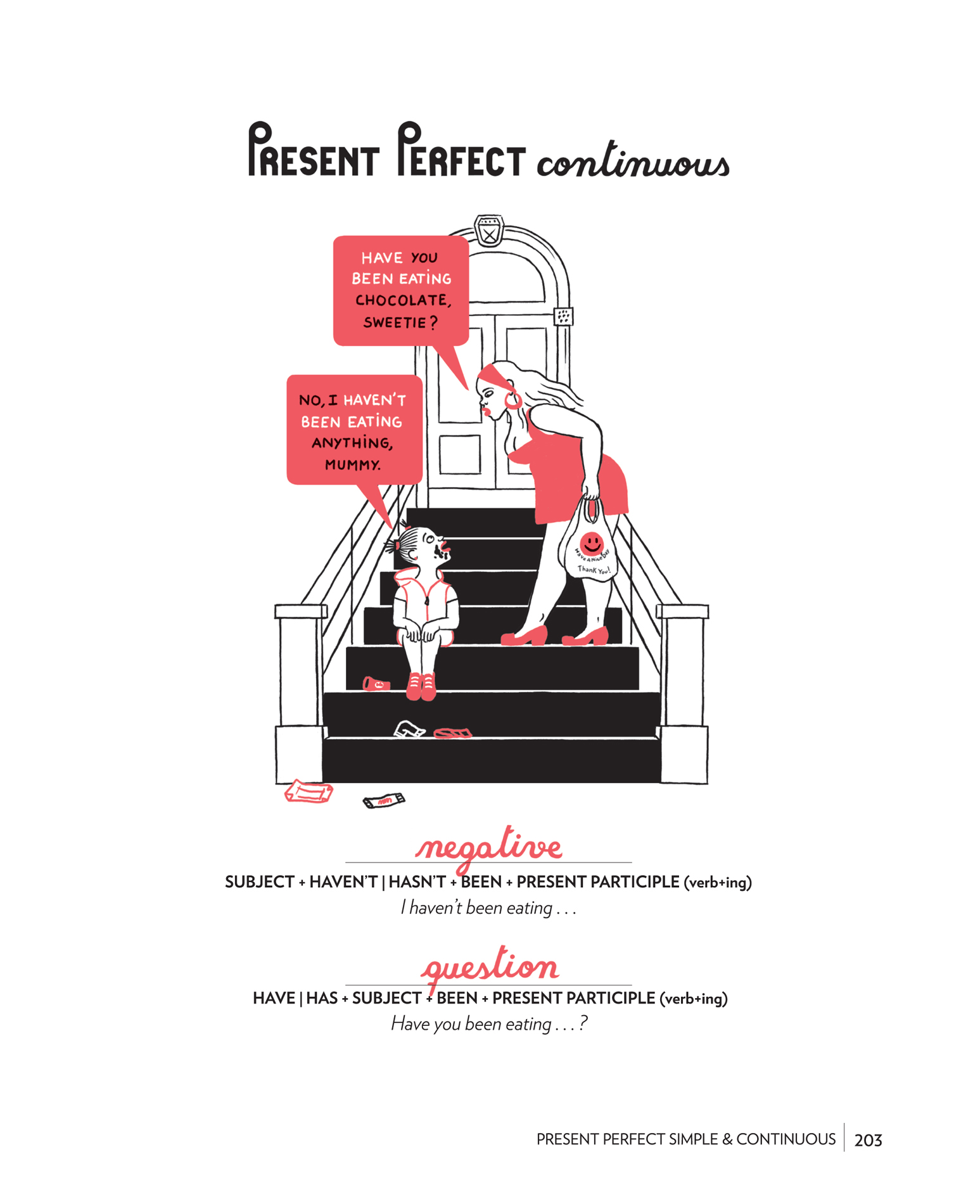
Figure 11.4: Present Perfect Continuous 否定與疑問 — 媽媽抓到女兒在台階上偷吃巧克力
negative:SUBJECT + HAVEN’T | HASN’T + BEEN + PRESENT PARTICIPLE (verb+ing) — I haven’t been eating…
question:HAVE | HAS + SUBJECT + BEEN + PRESENT PARTICIPLE (verb+ing) — Have you been eating…?
現在完成式 vs 簡單過去式(Present Perfect or Simple Past?)#
這是整課最關鍵、也最容易出錯的對比章節。書中畫了一對胖胖的情侶坐在「MUSEUM OF NATURAL HISTORY」(自然史博物館)門口的長椅上:
- 女生(穿運動背心)說:I always thought dinosaurs were just science fiction.(我一直以為恐龍只是科幻小說裡的東西。)
- 男生回:I have believed in the existence of dinosaurs since I met you.(自從遇到你,我就相信恐龍存在。)
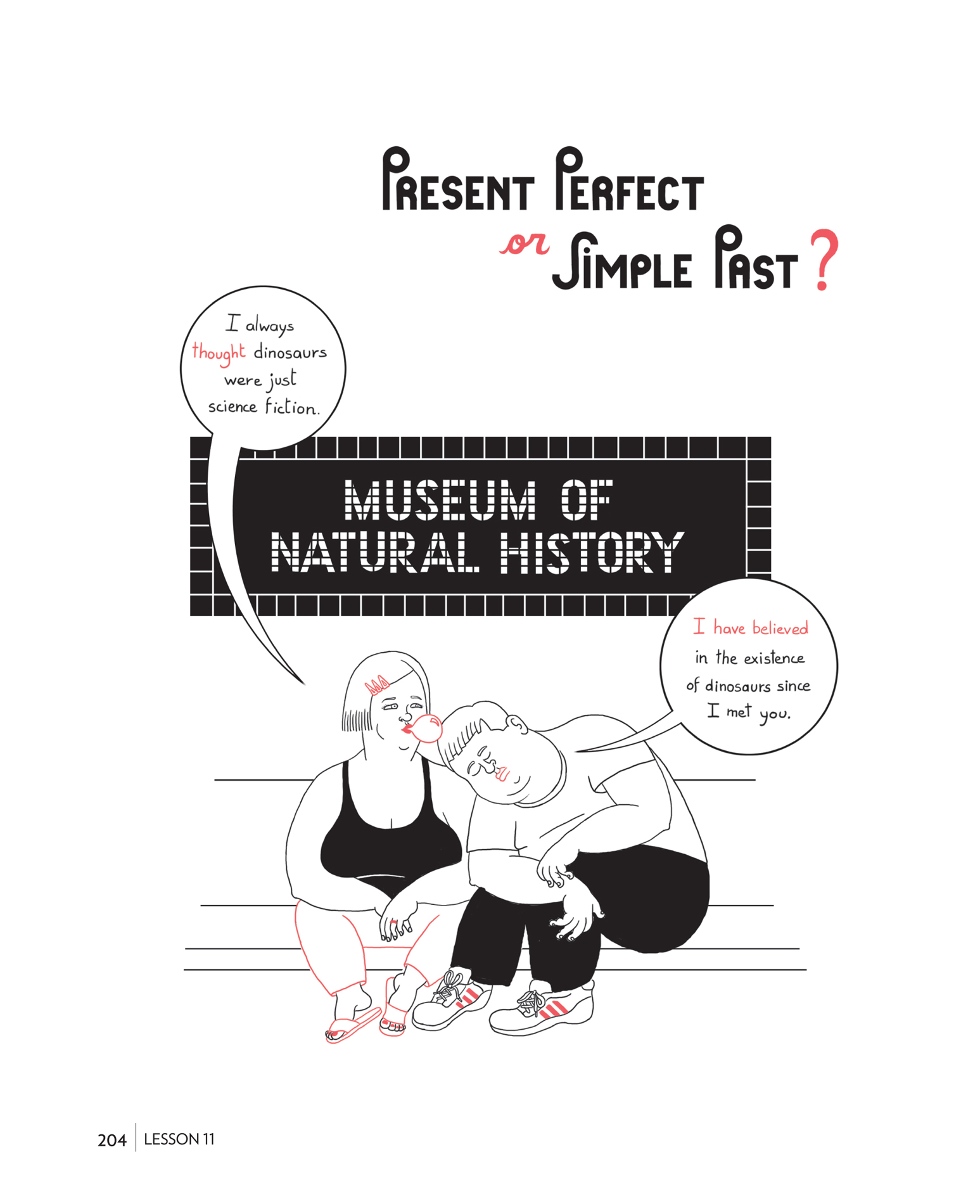
Figure 11.5: Present Perfect or Simple Past — 自然史博物館門口情侶的 thought 與 have believed 對比
兩人說的是同一件事,但時態完全不同 — 因為含意不同:
The SIMPLE PAST is usually used for finished actions with a past time expression (yesterday, ago, last week…).
簡單過去式:用於「已經結束、有明確過去時間點」的動作(昨天、幾天前、上週……)。
I always thought dinosaurs were just science fiction. = she doesn’t think so any more.(她現在已經不這麼想了。)
The PRESENT PERFECT is usually used if an action started in the past and is still going on now.
現在完成式:動作從過去開始,到現在仍在持續。
I have believed in the existence of dinosaurs since I met you. = he still believes they exist.(他現在仍相信恐龍存在。)
換句話說:
- 結束了 → simple past
- 還沒結束、延續到現在 → present perfect
過去完成式(Past Perfect Simple and Continuous)#
過去完成式的參考點不是「現在」,而是「過去某一刻」,用來表達「比那一刻更早發生」的事 — 類似「過去的過去」。
Simple Past Perfect#
肯定句公式:SUBJECT + HAD + PAST PARTICIPLE
例:I had fallen…
書中插畫:一個女孩連人帶腳踏車摔成一團,旁邊腳踏車輪還在轉。她的內心 OS:
I had never fallen off my bike before.(我以前從沒從腳踏車上摔下來過。)
用法說明:
- 用來談「在過去某個事件之前發生的另一個動作」(an ACTION that happened BEFORE ANOTHER EVENT in the past)
- 描述時間的副詞如 already、just、never、ever、before 很常出現
- 例句:She had never fallen off her bike before the time when she broke her leg.(在她摔斷腿之前,她從沒從腳踏車上摔下來過。)
也用於 REPORTED SPEECH(轉述句):
- She whispered what they had said.(她小聲說出他們說過的話。)
- 旁邊還有一個八卦對話:She told me that he had told her that Elisa is pregnant. / Oh my God!(她跟我說,他跟她說 Elisa 懷孕了 — 我的天哪!)
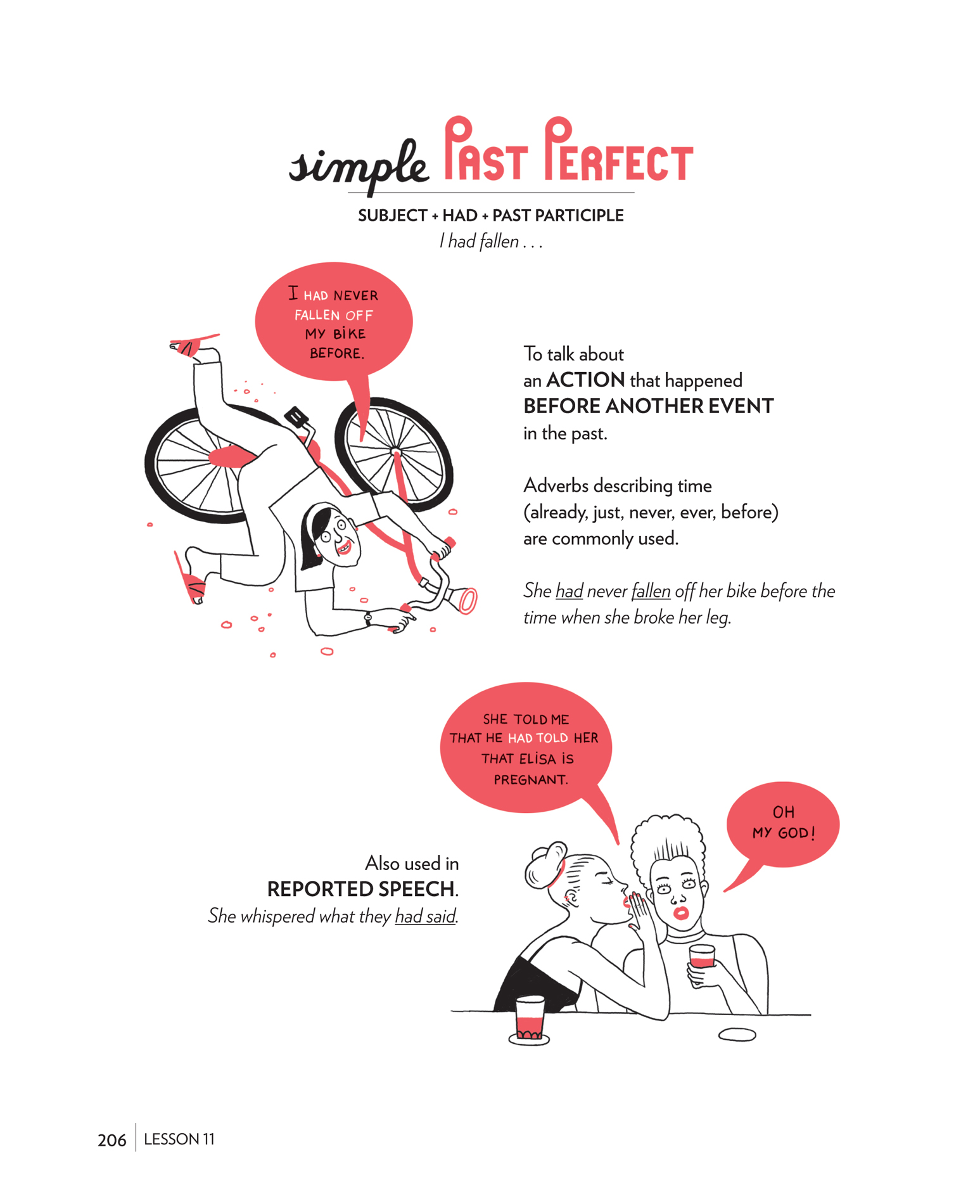
Figure 11.6: Simple Past Perfect — 摔車女孩的「I had never fallen off my bike before」與轉述句的 reported speech 場景
Past Perfect Continuous#
肯定句公式:SUBJECT + HAD BEEN + PRESENT PARTICIPLE (verb+ing)
例:She had been dancing…
插畫畫了五個編號 1–5 的舞者連續舞步,最後一格定格成她拄拐杖的樣子。
用法說明:
- 用來談「過去開始、一直持續到另一個過去事件才停下」的動作(an ACTION that started in the past and CONTINUED UP UNTIL ANOTHER EVENT in the past)
- 例句:She had been dancing until her back said ‘stop’.(她一直跳舞,直到背受不了喊停為止。)
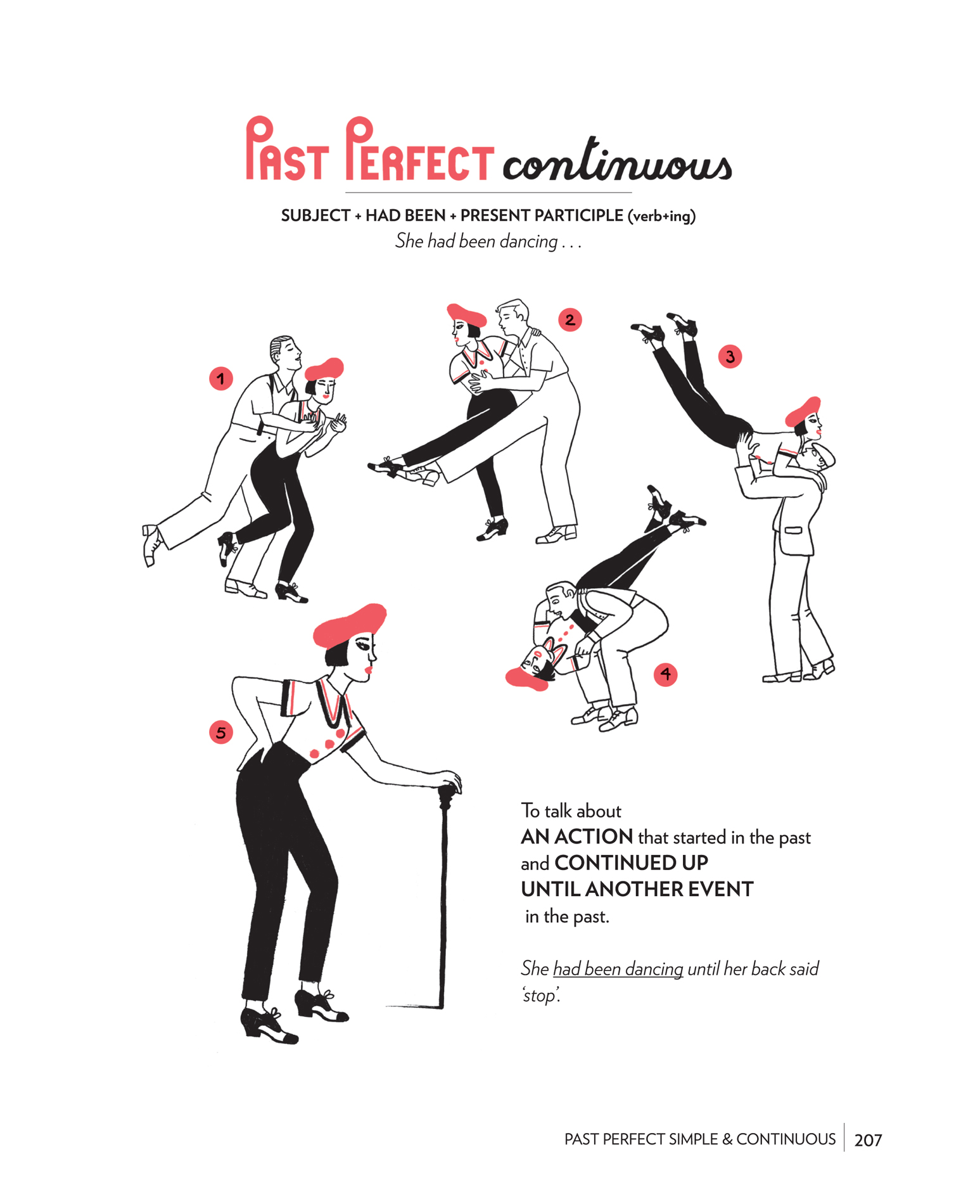
Figure 11.7: Past Perfect Continuous — 五個編號舞步從跳舞到拄拐杖的連續動作
Past Perfect 否定與疑問#
書中以「黑色長髮怪物 + 一群小人」與「法庭審訊」兩個畫面分別示範:
- Had you ever been anywhere that had so many people before you came to the city?(你來這城市以前,有去過這麼多人的地方嗎?)
- No, I hadn’t, and I hadn’t ever felt this alone, either.(沒有,而且我從沒這麼孤單過。)
法庭場景(法官 vs 被告):
- 法官:Had you been stealing from your clients before the company went bankrupt?(公司倒閉前你是不是一直在偷客戶的錢?)
- 被告:No, I hadn’t been stealing. I had been investing in myself!(沒有,我不是在偷,我是在「投資自己」!)
Simple negative:SUBJECT + HADN’T + PAST PARTICIPLE — I hadn’t felt…
Simple question:HAD + SUBJECT + PAST PARTICIPLE — Had you been…?
Continuous negative:SUBJECT + HADN’T + BEEN + PRESENT PARTICIPLE — I hadn’t been stealing…
Continuous question:HAD + SUBJECT + BEEN + PRESENT PARTICIPLE — Had you been stealing…?
未來完成式(Future Perfect Simple and Continuous)#
未來完成式是「站在未來某一刻,回頭看一個將會完成或仍在進行的動作」。
Simple Future Perfect#
肯定句公式:SUBJECT + WILL HAVE + PAST PARTICIPLE
例:I will have succeeded…
插畫:一個男人站在水塔頂、俯瞰夜晚的城市天際線,內心獨白:
By next spring, maybe I ’ll have succeeded in making a friend.(也許到明年春天,我終於會成功交到一個朋友。)
文字說明:用來表示「在未來某個時間點之前,一個動作將會被完成」(an ACTION will be COMPLETED BY A CERTAIN TIME in the future)。
例句:
He will have succeeded in making a friend by the time he’s no longer afraid of people. When he makes a friend, he will have overcome his fear of people.
(在他不再怕人之前,他會交到一個朋友。等他交到朋友時,他將已經克服了對人的恐懼。)
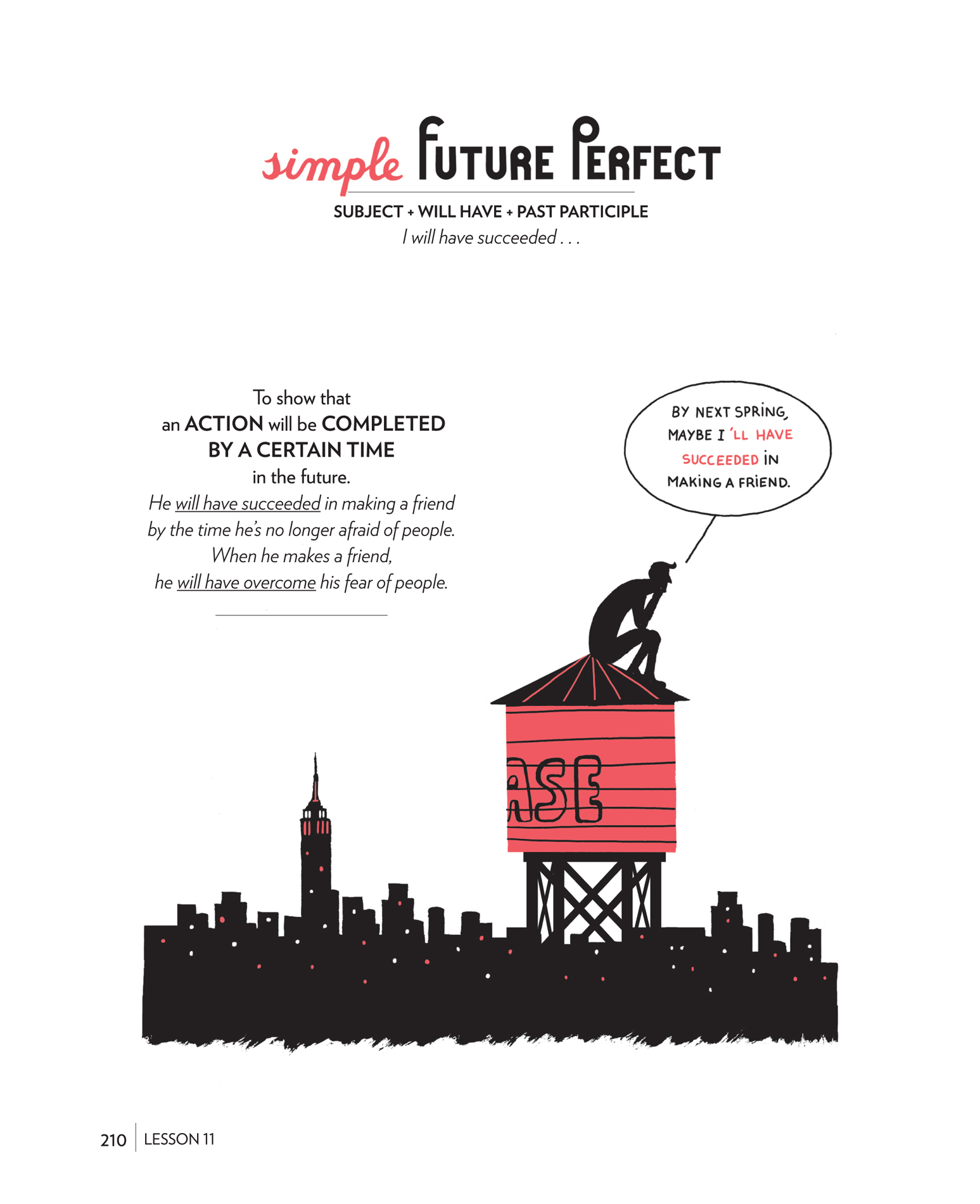
Figure 11.8: Simple Future Perfect — 男人坐在水塔頂俯瞰夜景的 by next spring 內心獨白
Future Perfect Continuous#
肯定句公式:SUBJECT + WILL HAVE BEEN + PRESENT PARTICIPLE (verb+ing)
例:I will have been working…
插畫:一位戴髮帶、穿圍裙的女工在工廠生產線旁,旁邊放著她的便當盒。她說:
I’ll have been working for 16 hours when I finish my shift.(等我下班時,我會已經連續工作 16 小時了。)
文字說明:用來表示「未來某個時間點之前,一個活動已經持續了多久」(show how long an ACTIVITY will be taking place BEFORE ANOTHER in the future)。
例句:
She will have been working for 16 hours and she will still have to prepare dinner for her husband.(她將已連續工作 16 小時,回家還得幫老公做晚餐。)
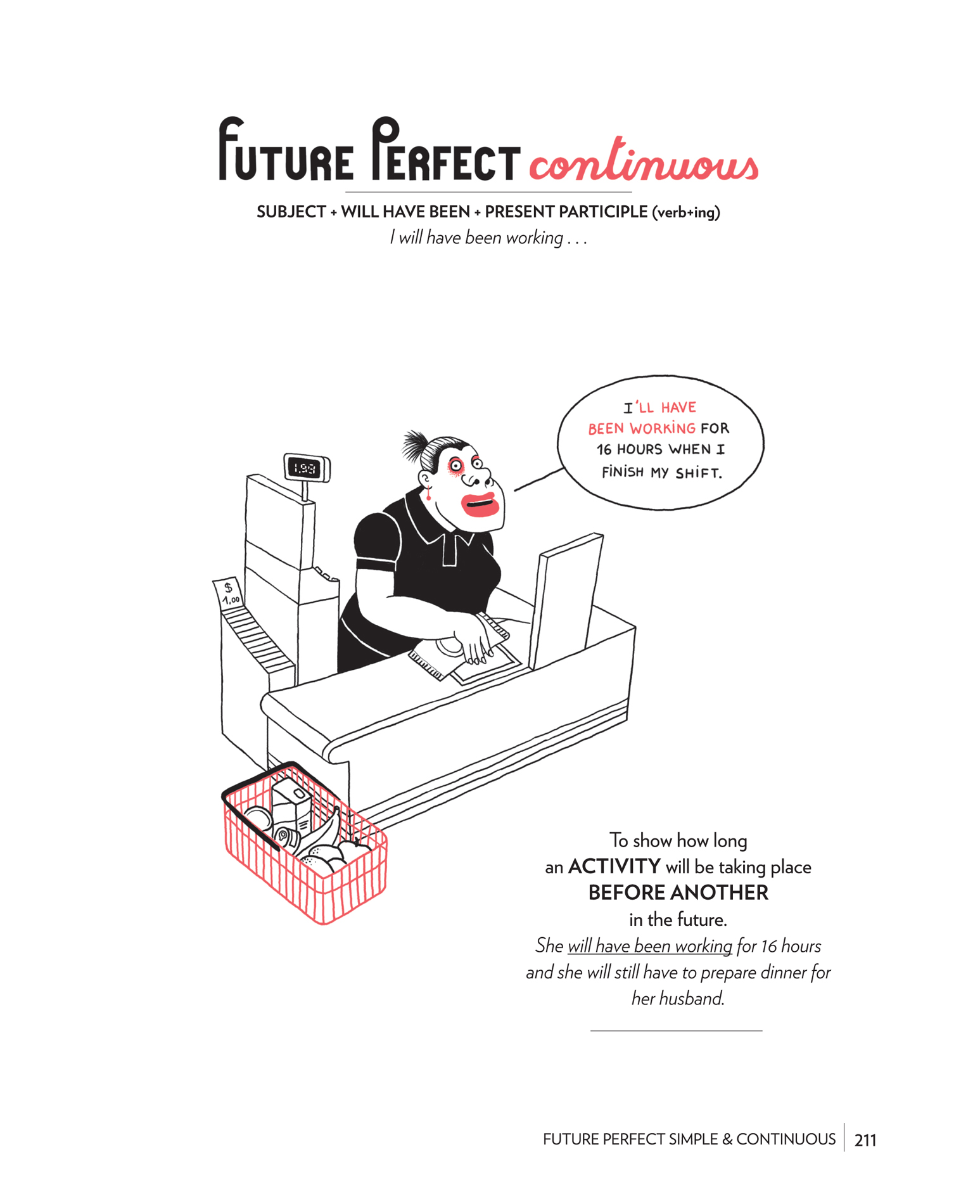
Figure 11.9: Future Perfect Continuous — 工廠生產線旁戴髮帶女工的「I'll have been working for 16 hours」
Future Perfect 否定與疑問#
Simple 用一張白雪公主與死神並肩走路的對話示範:
- 公主問:Will I have got my self-confidence back by next Halloween?(到明年萬聖節,我會把自信找回來嗎?)
- 死神回:I don’t know. But what I do know is you won’t have forgiven your mother.(我不知道。但我知道的是 — 你不會原諒你媽。)
Continuous 則用一個埋在書堆裡的女孩示範:
How long will I have been trying to learn English after this? 3, 4 years… 6 years… Oh well, I won’t have been wasting my time if I finally do learn.
(這之後我大概又要再學幾年英文?三年、四年……六年……算了,只要最後真的學會,那我這些時間就不算白費。)
書桌上幾本書還寫著 American Spanish Institute - NY 2008、Bell School - NY 2007、Summer 2007、Official School of Languages 2004、High School 1995–1999 — 這正是作者本人的英文學習簡歷自嘲。
Simple negative:SUBJECT + WON’T HAVE + PAST PARTICIPLE — You won’t have forgiven…
Simple question:WILL + SUBJECT + HAVE + PAST PARTICIPLE — Will I have got…?
Continuous negative:SUBJECT + WON’T HAVE BEEN + PRESENT PARTICIPLE — I won’t have been wasting…
Continuous question:WILL + SUBJECT + HAVE BEEN + PRESENT PARTICIPLE — Will I have been trying…?
所有時態總整理(All Verb Tenses)#
本書最重要的兩頁。作者畫了一個女子對著虛空大喊「ALL VERB TENSES」,然後用三張表(Present、Past、Future)把全 12 種時態的代表例句全部排出來,讓讀者一眼看清「哪一個時態用在哪個時間軸區間」。
表格欄位以 PAST | PRESENT | FUTURE 三欄表示動作所「指涉的時間」,例句的格子位置就代表它指涉的時間範圍。有些例句橫跨多格 — 因為那個用法本身跨越多個時間區間。
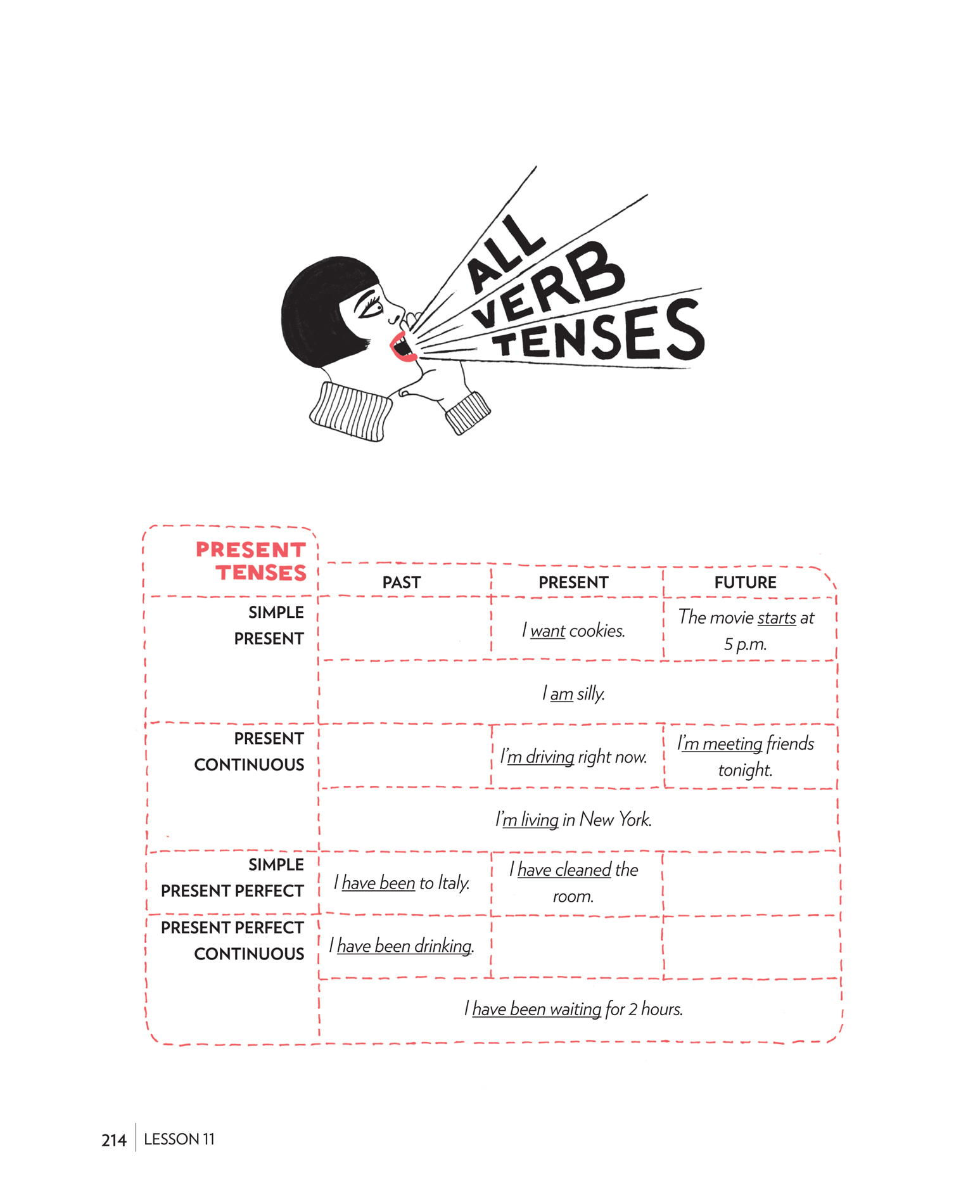
Figure 11.10: All Verb Tenses(一)— 開場大喊與 Present Tenses 四種時態的時間軸定位表
Present Tenses(現在式系統)#
| 時態 | PAST | PRESENT | FUTURE |
|---|---|---|---|
| Simple Present | — | I want cookies. | The movie starts at 5 p.m. |
| Simple Present(橫跨三格) | I am silly. | ||
| Present Continuous | — | I’m driving right now. | I’m meeting friends tonight. |
| Present Continuous(橫跨三格) | I’m living in New York. | ||
| Simple Present Perfect | I have been to Italy. | I have cleaned the room. | — |
| Present Perfect Continuous | I have been drinking. | — | — |
| Present Perfect Continuous(橫跨三格) | I have been waiting for 2 hours. |
關鍵觀察:
- Simple Present 不只談「現在」 — I am silly 是恆常事實(橫跨過去到未來),The movie starts at 5 p.m. 是表定的未來
- Present Continuous 也能談未來(已安排的計畫,I’m meeting friends tonight.)
- Present Perfect 站在現在回頭看:I have been to Italy(過去發生)、I have cleaned the room(剛完成、結果還在)
Past Tenses(過去式系統)#
| 時態 | PAST | PRESENT | FUTURE |
|---|---|---|---|
| Simple Past | I played with dolls. | If I lied to you, you would know. | If you forgot to bring it, I’d remind you. |
| Past Continuous | I was sleeping at 11 a.m. | — | If I wasn’t working tomorrow, I would go. |
| Simple Past Perfect | I had lost some weight. | — | — |
| Past Perfect Continuous | I had been crying all day. | If I had been reading, I wouldn’t have seen you. | — |
關鍵觀察:
- 「過去式」不只用來談過去 — 在假設語氣(if 子句)裡,simple past 和 past continuous 也可以指現在或未來的假想情境
- If I wasn’t working tomorrow… 句中 was 雖是過去形,指的是明天(未來)
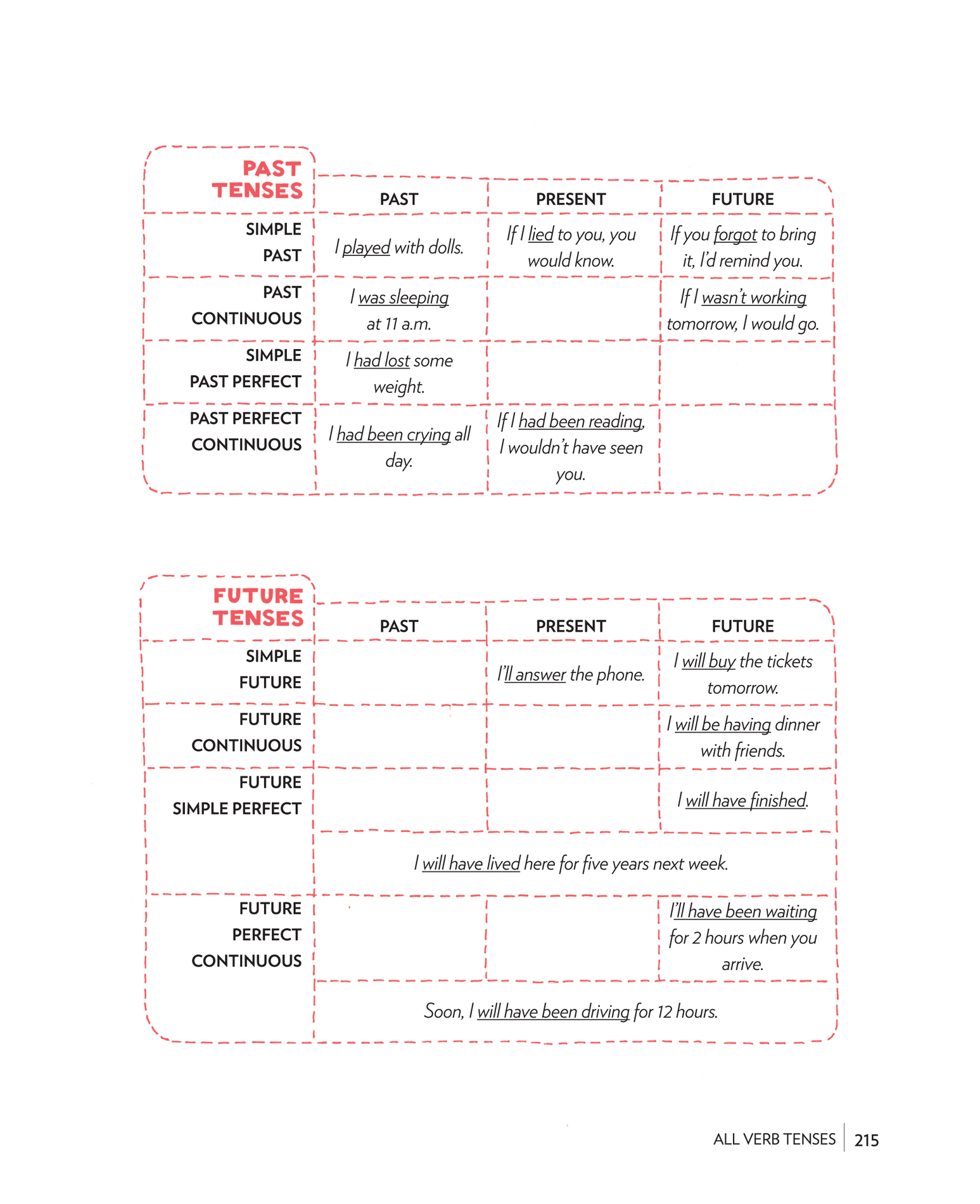
Figure 11.11: All Verb Tenses(二)— Past Tenses 與 Future Tenses 兩張時態總表
Future Tenses(未來式系統)#
| 時態 | PAST | PRESENT | FUTURE |
|---|---|---|---|
| Simple Future | — | I’ll answer the phone. | I will buy the tickets tomorrow. |
| Future Continuous | — | — | I will be having dinner with friends. |
| Future Simple Perfect | — | — | I will have finished. |
| Future Simple Perfect(橫跨三格) | I will have lived here for five years next week. | ||
| Future Perfect Continuous | — | — | I’ll have been waiting for 2 hours when you arrive. |
| Future Perfect Continuous(橫跨三格) | Soon, I will have been driving for 12 hours. |
關鍵觀察:
- Simple Future 也能指「現在做的決定」(I’ll answer the phone. — 電話響了當下決定接)
- Future Perfect 跨格的例句說明「持續到未來某點的累計時間」需要橫跨整個時間軸思考
- I will have lived here for five years next week. 表示這五年從過去開始,延續到下週才會剛好滿五年
看完這三張表,最重要的一個感悟是:「時態名稱」不等於「動作發生的時間」。Simple past 可以講未來假設,simple present 可以講未來事實,present perfect 可以講從過去延伸到現在 — 真正決定時態的是「說話者站在哪個時間點看這個動作」與「這個動作的時間範圍」。