這一課把英文的「副詞」與「介系詞中最讓人糊塗的 in / on / at」一次盤點清楚。作者用插畫示範每一類副詞該擺在句子裡的什麼位置,又用三欄表格把「地點 vs 時間」的 in / on / at 並排,讓人一眼就能看出差別。
副詞是什麼(Adverbs)#
An ADVERB modifies a verb, an adjective or another adverb. (副詞用來修飾動詞、形容詞或另一個副詞。)
It indicates how, where, when, why or under what conditions something happens.
書中用一段話一口氣示範了好幾類副詞同時上場:
- She always goes to the cafe in the afternoon, where she has a cup of tea, probably after spending too much time outside.
- Surely she is sad.
- Or maybe simply tired.
底線標出來的字都是副詞 — 有頻率(always)、時間(afternoon, after)、地點關係(where)、確定程度(probably, surely, maybe)、程度(too much)、觀點(simply)。
時間副詞(Time Adverbs)#
時間副詞回答三種問題:
| 類別 | 問什麼 | 例字 |
|---|---|---|
| HOW OFTEN | 多常 | sometimes, frequently, never, often, yearly |
| FOR HOW LONG | 持續多久 | all day, not long, for a while, since last year |
| WHEN | 什麼時候 | today, yesterday, later, now, last year |
擺放位置:
- WHEN 副詞通常放句尾 — She is pregnant now.
- FOR HOW LONG 副詞通常放句尾 — She has been pregnant for nine months.
- HOW OFTEN 副詞通常放在主動詞之前、助動詞之後 — She has often had strange cravings during her pregnancies.
- 但若是「精確次數」的 HOW OFTEN,則放在句尾。
一句裡若同時出現多個時間副詞,順序是:FOR HOW LONG → HOW OFTEN → WHEN。
例:She has been pregnant for nine months every year for the last decade.
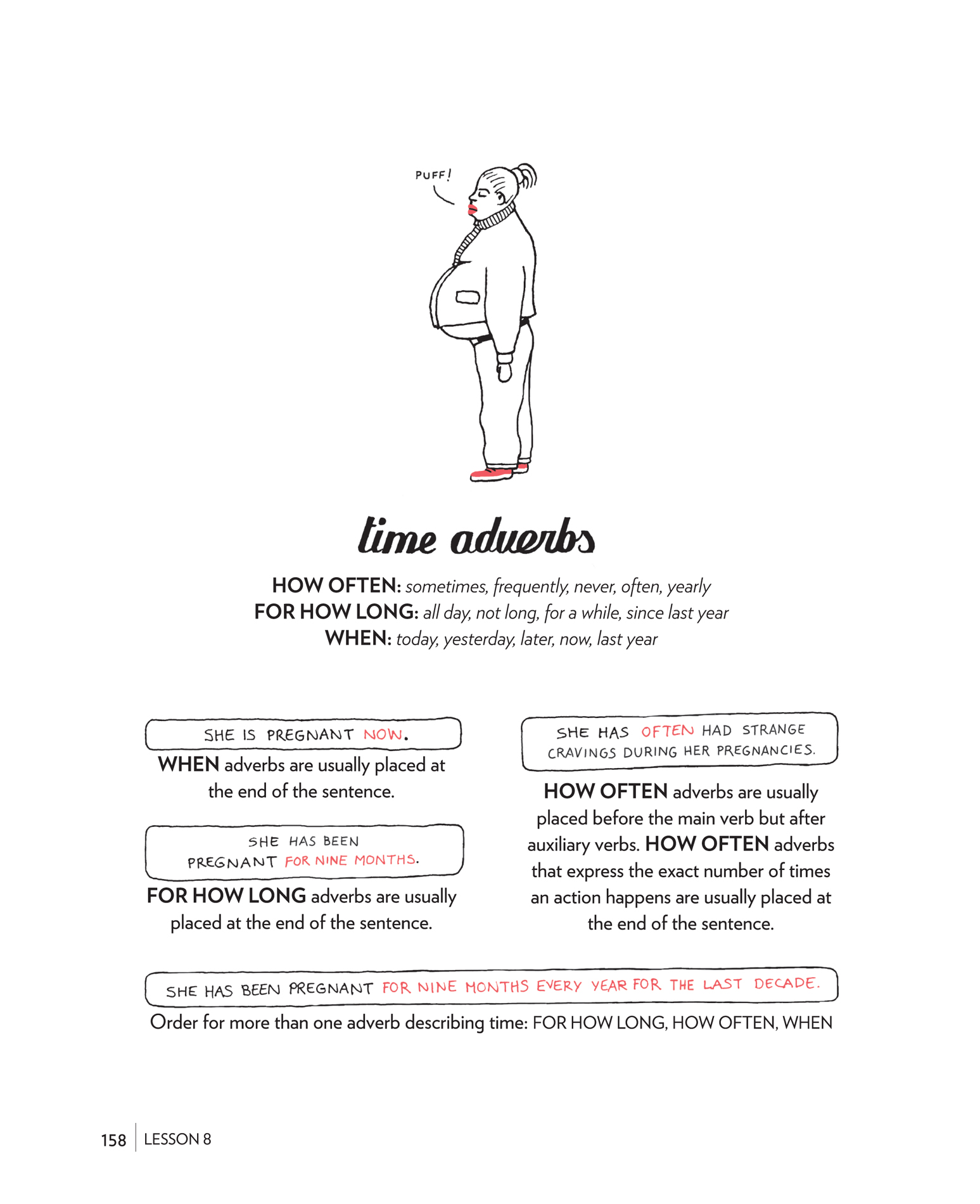
Figure 8.1: 時間副詞 — 用孕婦的「九個月」串起 WHEN / FOR HOW LONG / HOW OFTEN
疑問副詞(Interrogative Adverbs)#
疑問副詞 why, where, how, when 通常放在問句的開頭。
例:Why am I so great?
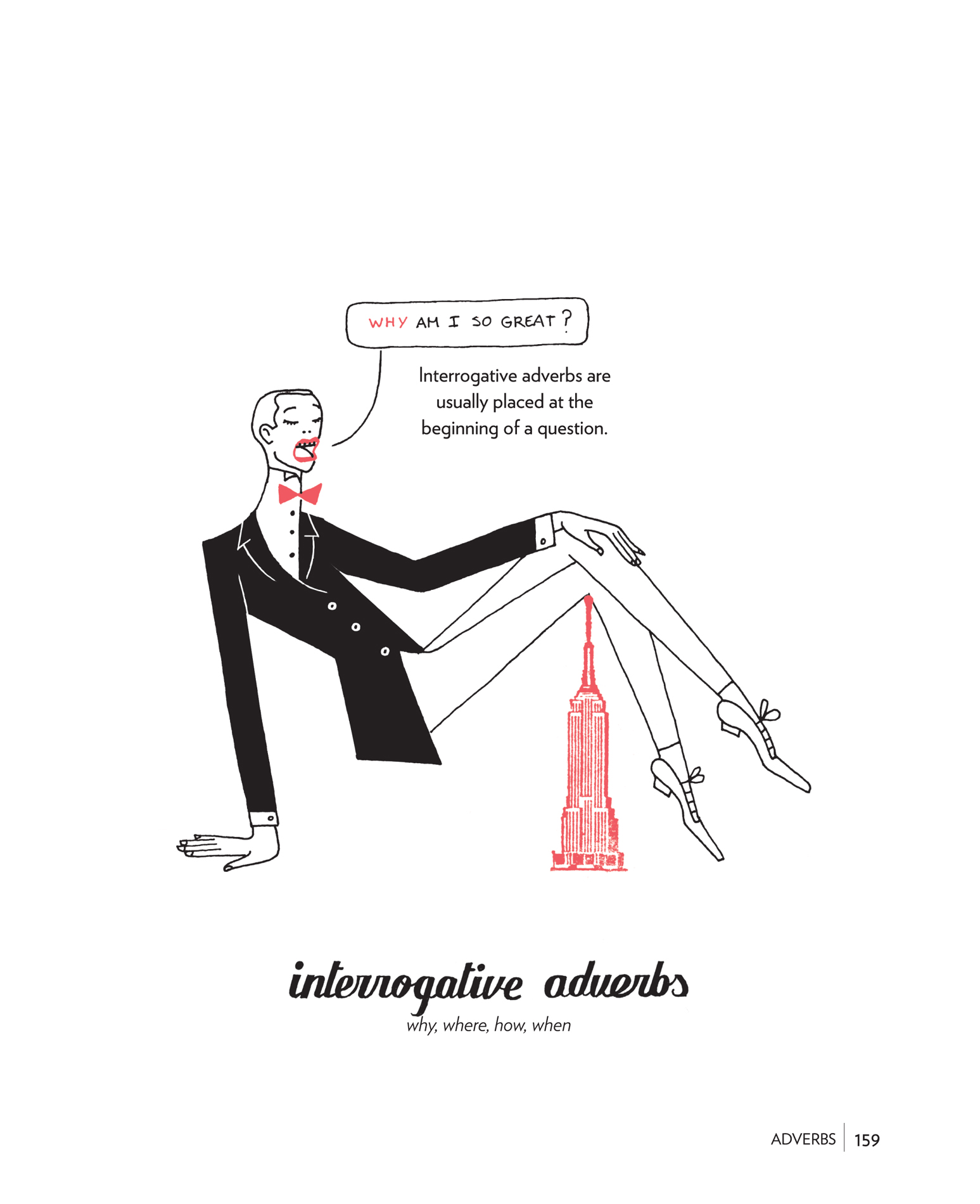
Figure 8.2: 疑問副詞 — 跨坐在帝國大廈上的男子問「Why am I so great?」
關係副詞(Relative Adverbs)#
關係副詞 where, when, why 用來把一個子句連回先行詞,介紹「地點 / 時間 / 原因」。
例:That’s the place where you were conceived.
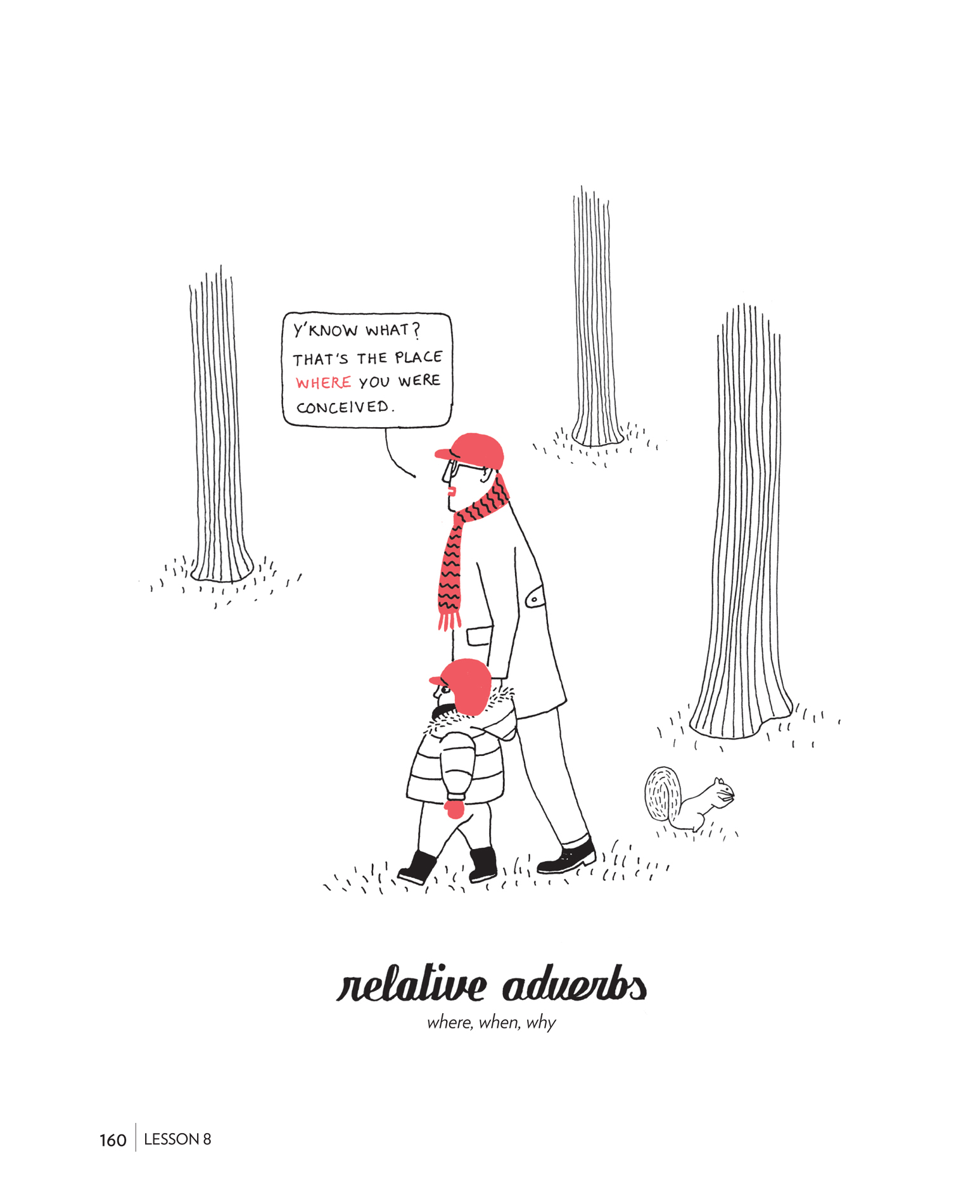
Figure 8.3: 關係副詞 — 父親在森林裡告訴孩子「That's the place where you were conceived.」
程度副詞(Adverbs of Degree)#
代表字:almost, nearly, just, too, enough, hardly, completely, very, quite
程度副詞通常放在它要修飾的主動詞、形容詞或副詞之前。
例:Tom gets quite horny when he drinks coffee.(quite 修飾形容詞 horny)
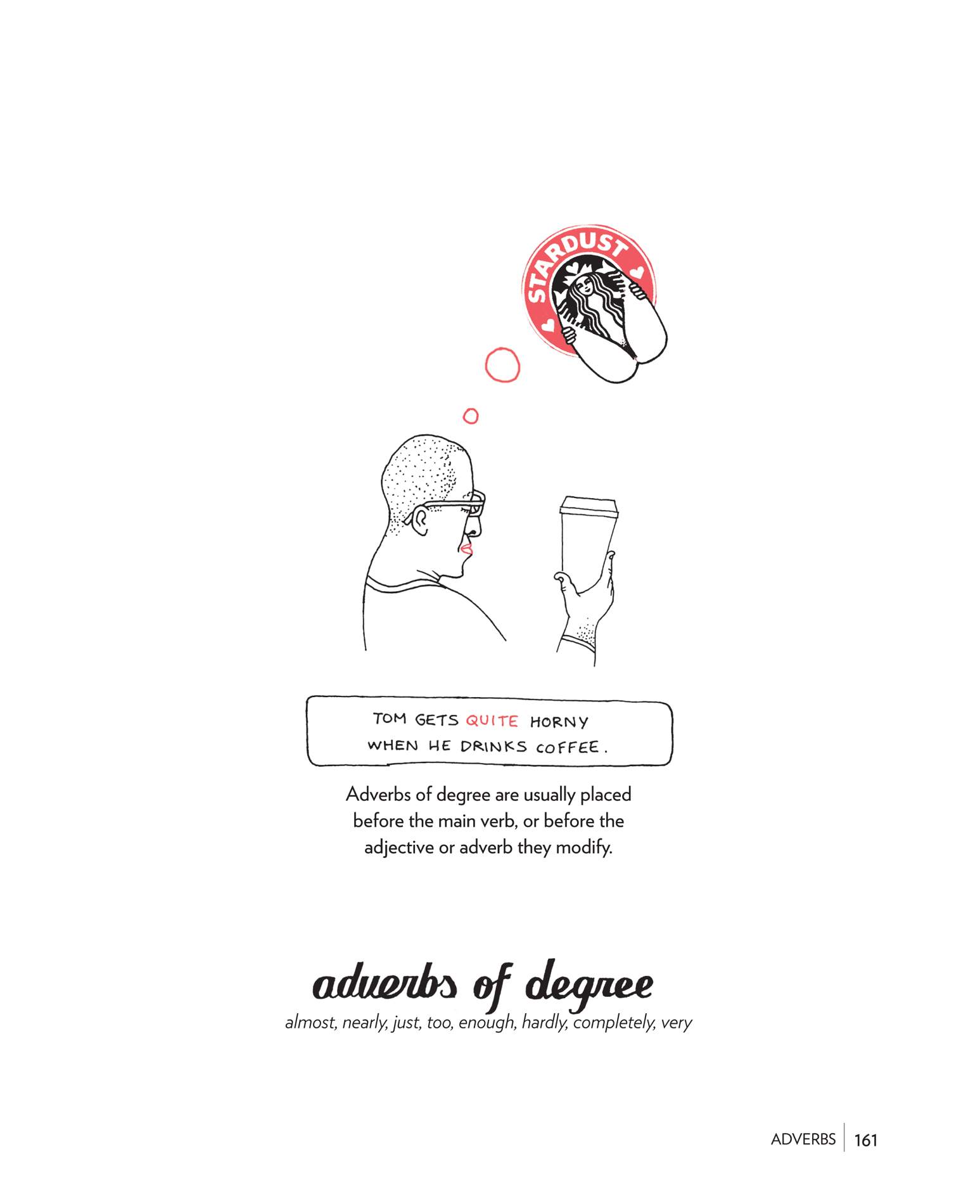
Figure 8.4: 程度副詞 — Tom 喝咖啡時腦中浮現「Stardust」女神圖樣,quite 修飾 horny
地點副詞(Place Adverbs)#
代表字:everywhere, away, up, down, around, out, back, in, outside
擺放位置:
- 通常放在主動詞之後 — Get out!
- 或放在受詞之後 — She takes her husband outside.
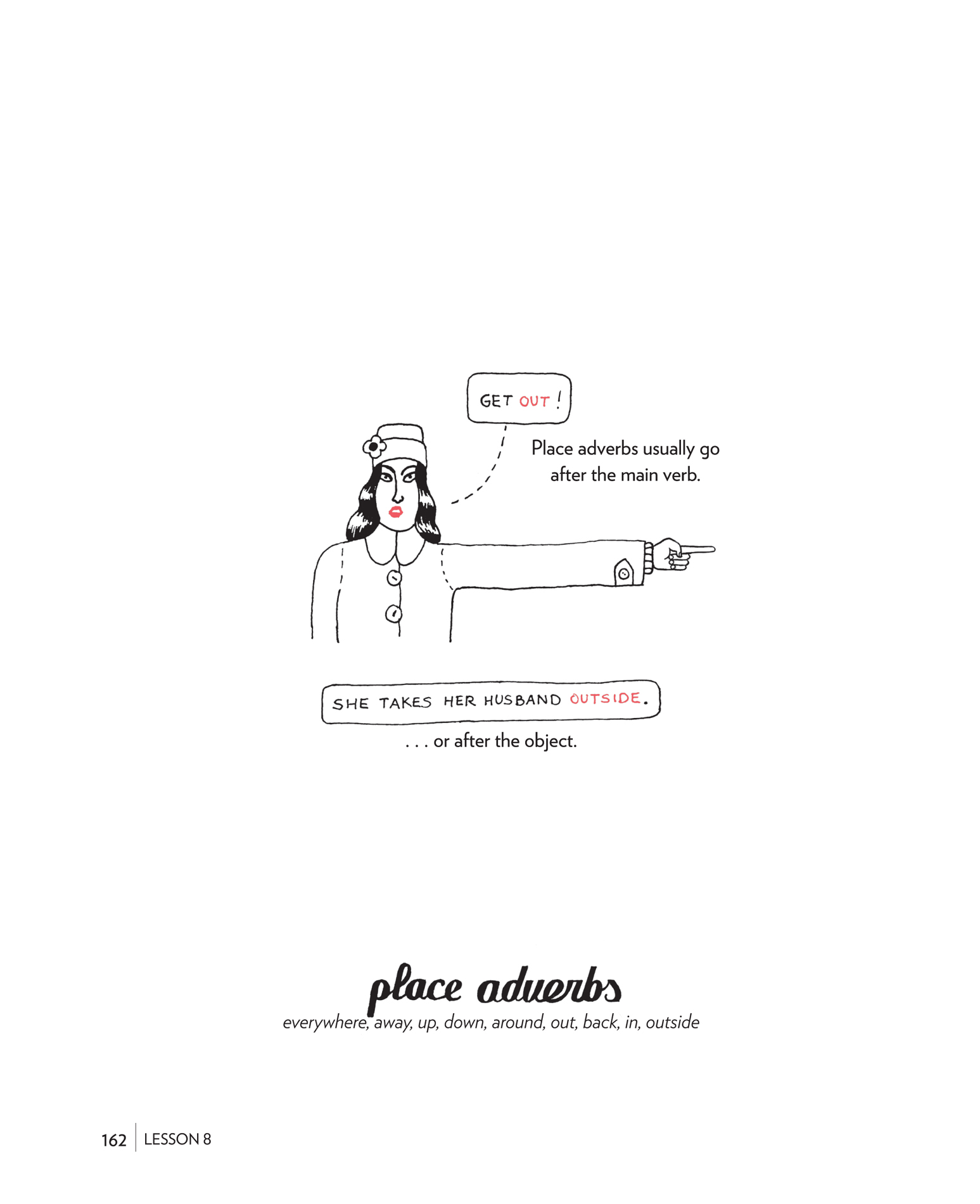
Figure 8.5: 地點副詞 — 女子伸手指向門外大喊「Get OUT!」
確定副詞(Certainty Adverbs)#
代表字:certainly, definitely, probably, undoubtedly, surely
確定副詞放在主動詞之前,但放在 be 動詞之後。
- 主動詞前 — It definitely died.
- be 動詞後 — I’m absolutely certain.
- 有助動詞時,副詞夾在助動詞和主動詞中間 — I have probably seen it before. Its face looks familiar to me.
- 有時也可放在句首 — Undoubtedly, they were quite big.
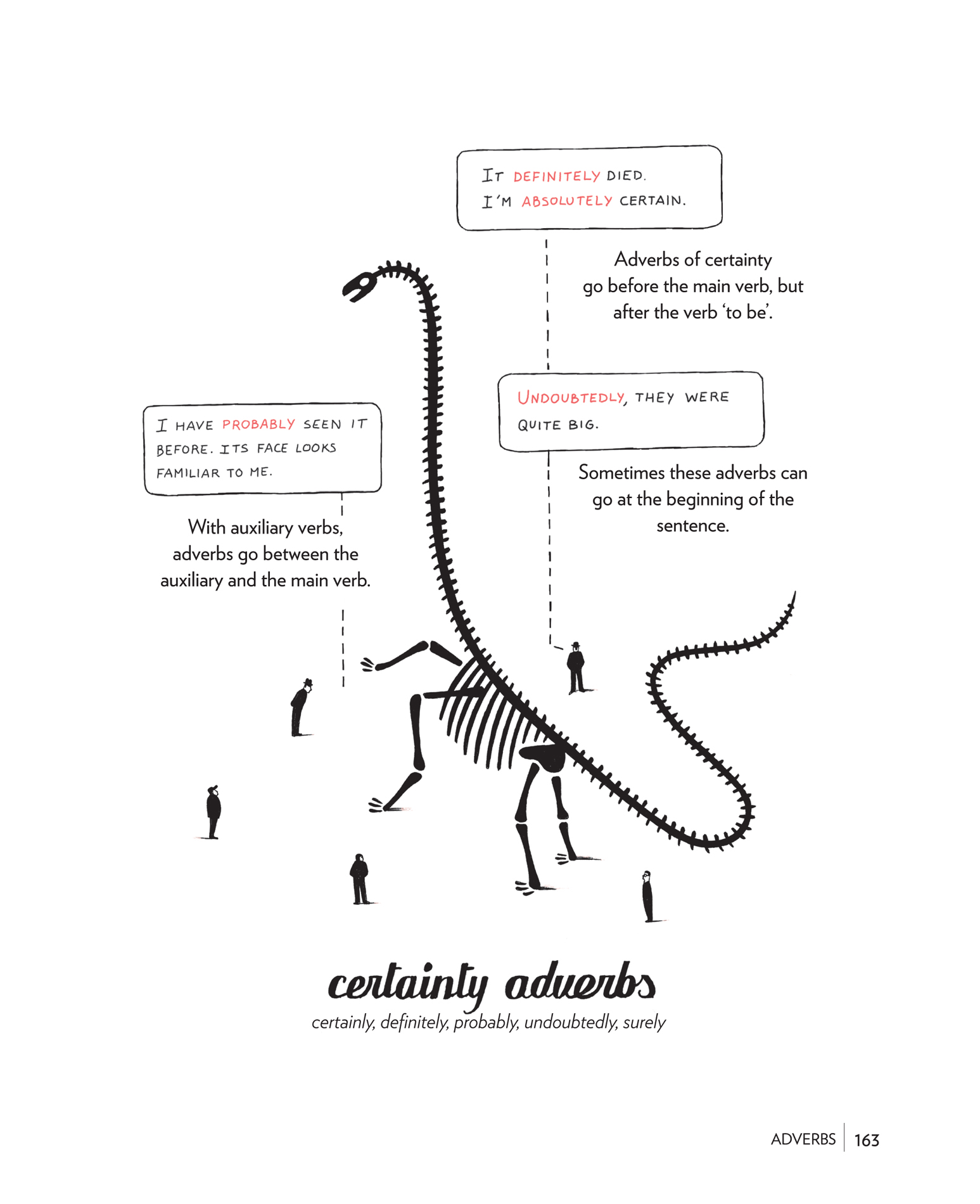
Figure 8.6: 確定副詞 — 觀察恐龍化石的人說「It DEFINITELY died.」「I have PROBABLY seen it before.」「UNDOUBTEDLY, they were quite big.」
方式副詞(Manner Adverbs)#
代表字:well, rapidly, slowly, quickly, easily, loudly, softly, beautifully(多以 -ly 結尾)
擺放位置:
- 通常放在主動詞或受詞之後 — She spends her salary quickly. / She spends it easily.
- 若是及物動詞,為了強調可以放在動詞前 — She happily bets against the machine.
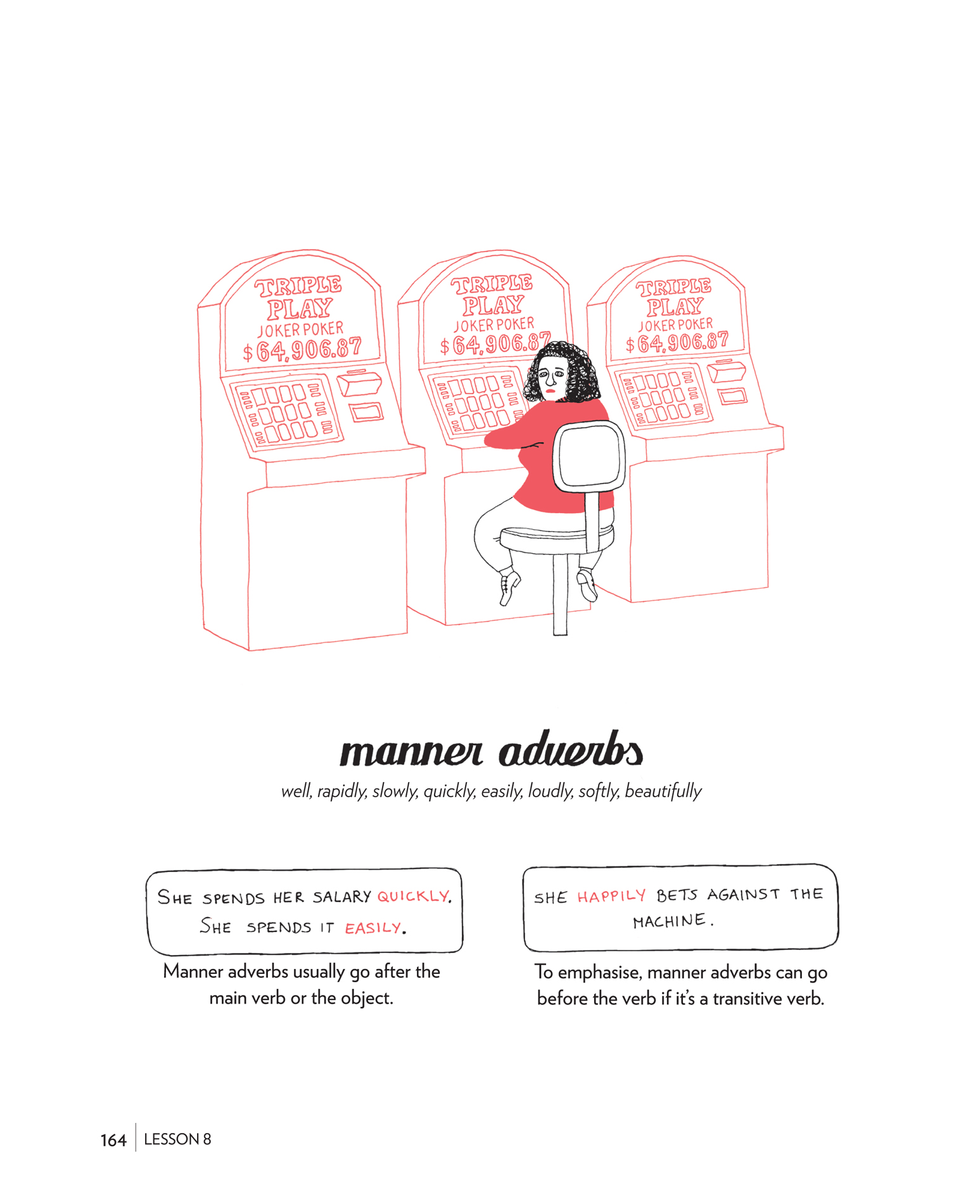
Figure 8.7: 方式副詞 — 女子坐在吃角子老虎前,She spends her salary QUICKLY、She HAPPILY bets against the machine
觀點副詞與評論副詞(Viewpoint & Commenting Adverbs)#
- 觀點副詞(Viewpoint adverbs):honestly, frankly, personally, obviously, surely, undoubtedly — 放在句首,並用逗號和句子主體分開。
- 例:Frankly, my dear, I don’t give a damn.
- 評論副詞(Commenting adverbs):definitely, certainly, obviously, simply — 用法很像觀點副詞,但放在 be 動詞之後、主動詞之前。
- 例:I think she is certainly the worst person I have ever known. Don’t you think?
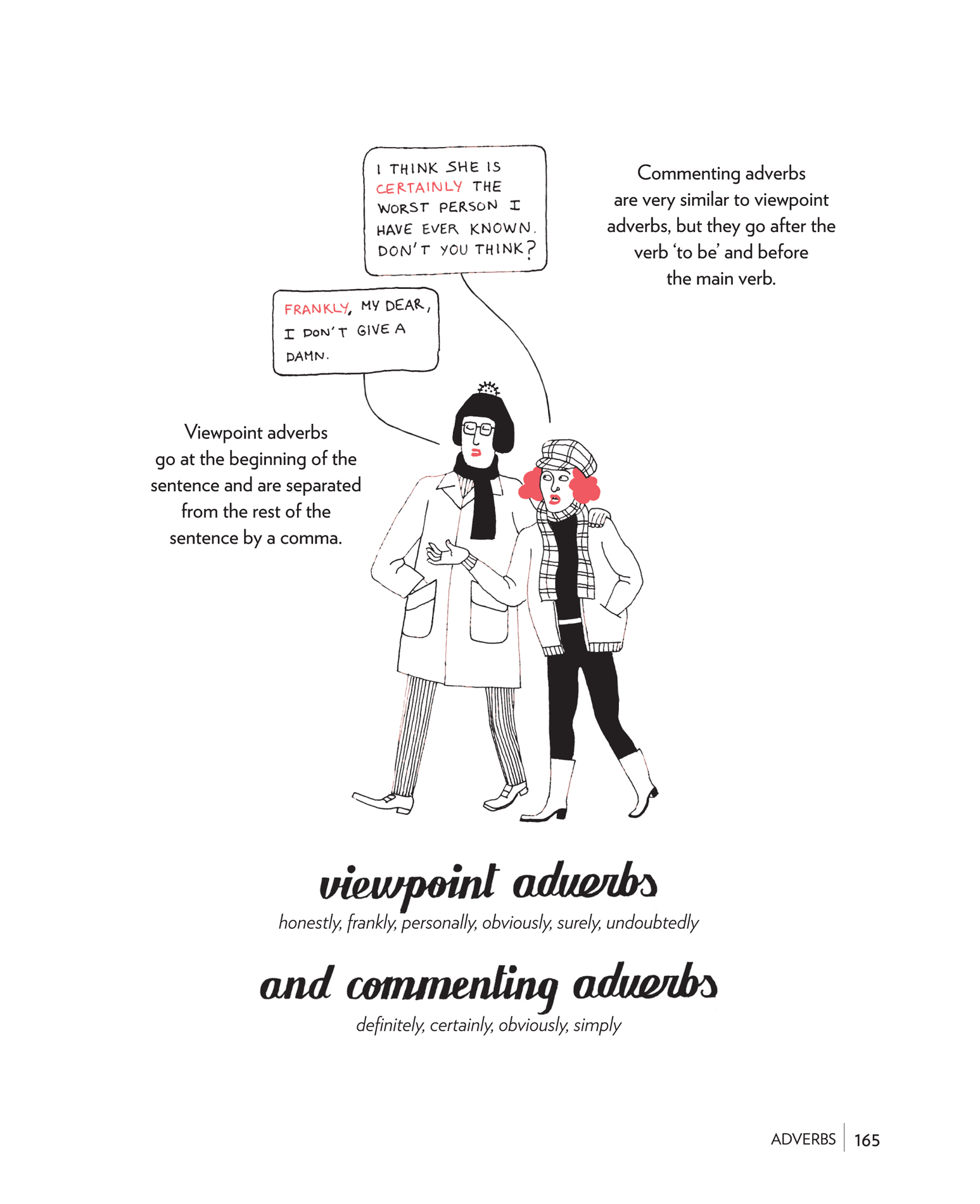
Figure 8.8: 觀點與評論副詞 — 兩位女士邊走邊說「FRANKLY, my dear, I don't give a damn.」「I think she is CERTAINLY the worst person...」
IN, ON, AT:地點介系詞(Place Prepositions)#
書中用一張紐約曼哈頓街景插畫,加上一個從高樓裡冒出的對話框,把三個介系詞一次串起來:
I live on the 33rd floor at 205 95th Street in New York.
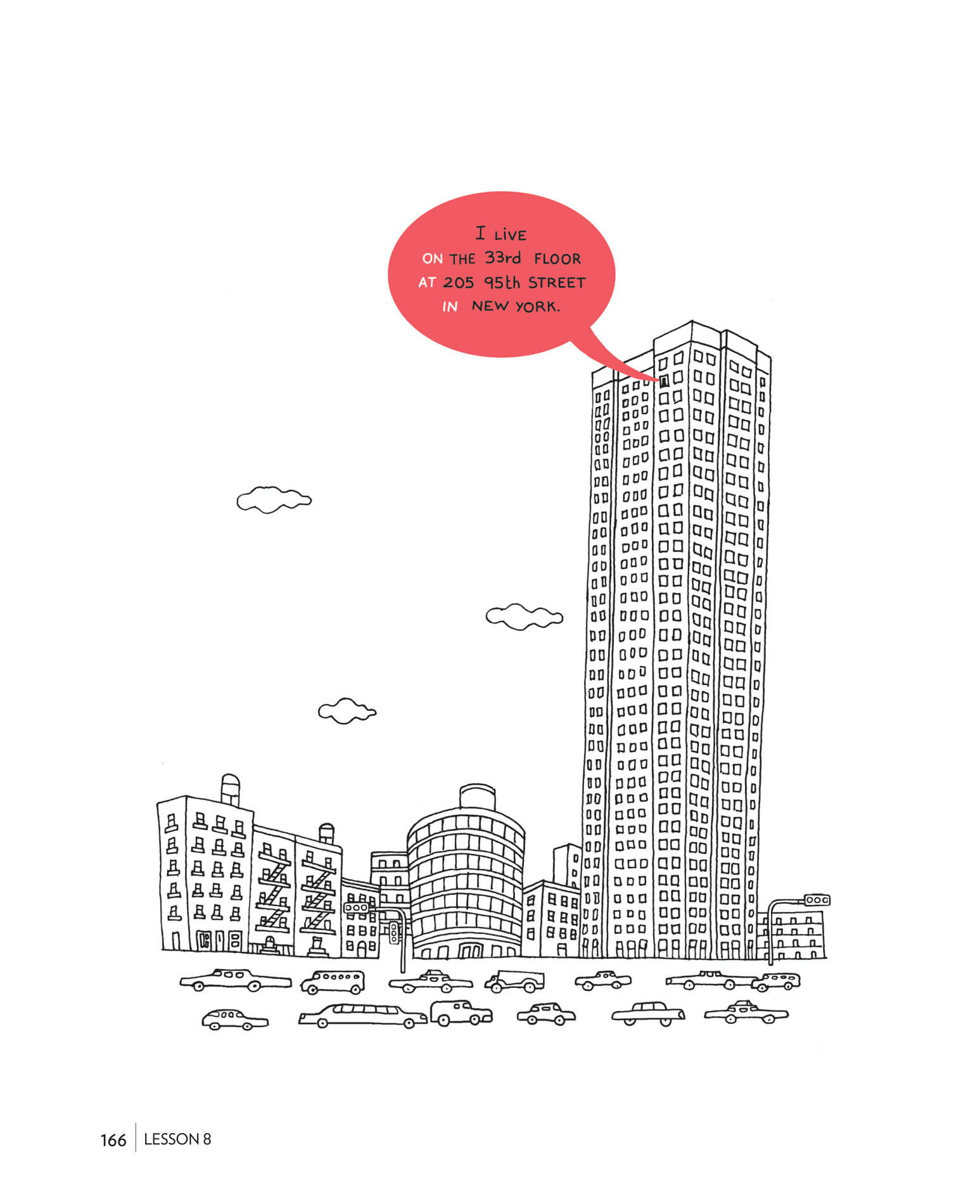
Figure 8.9: IN/ON/AT 地點介系詞 — 紐約曼哈頓街景,從高樓窗戶飛出的紅色對話框
| 介系詞 | 核心意義 | 例子 |
|---|---|---|
| IN | 在某個區域或空間裡面(inside an area or space) | in the city / in London / in bed / in my pocket / in the car |
| ON | 與表面接觸(in contact with a surface) | on the table / on the wall / on the floor / on the carpet / on the door |
| AT | 指出特定位置(referring to a position) | at the corner / at the end of the street / at the entrance / at the station / at the top of the page |
交通工具有特別規則:
- in a / the:car, lorry(私人小空間)
- on a / the:metro, bus, train, plane, ship, bicycle(大眾運輸或騎乘)
常見搭配(Common Expressions)
- in:in a car, in a taxi, in a lift, in the newspaper, in the sky, in Leicester Square
- on:on a bus, on a train, on a plane, on the radio, on the Internet, on the left
- at:at home, at work, at school, at college, at the bottom, at the reception
IN, ON, AT:時間介系詞(Time Prepositions)#
書中用一個拿著鐮刀的死神插畫,從骷髏頭嘴裡吐出三個介系詞:
I will scare you on Sundays at 10 o’clock in the winter.
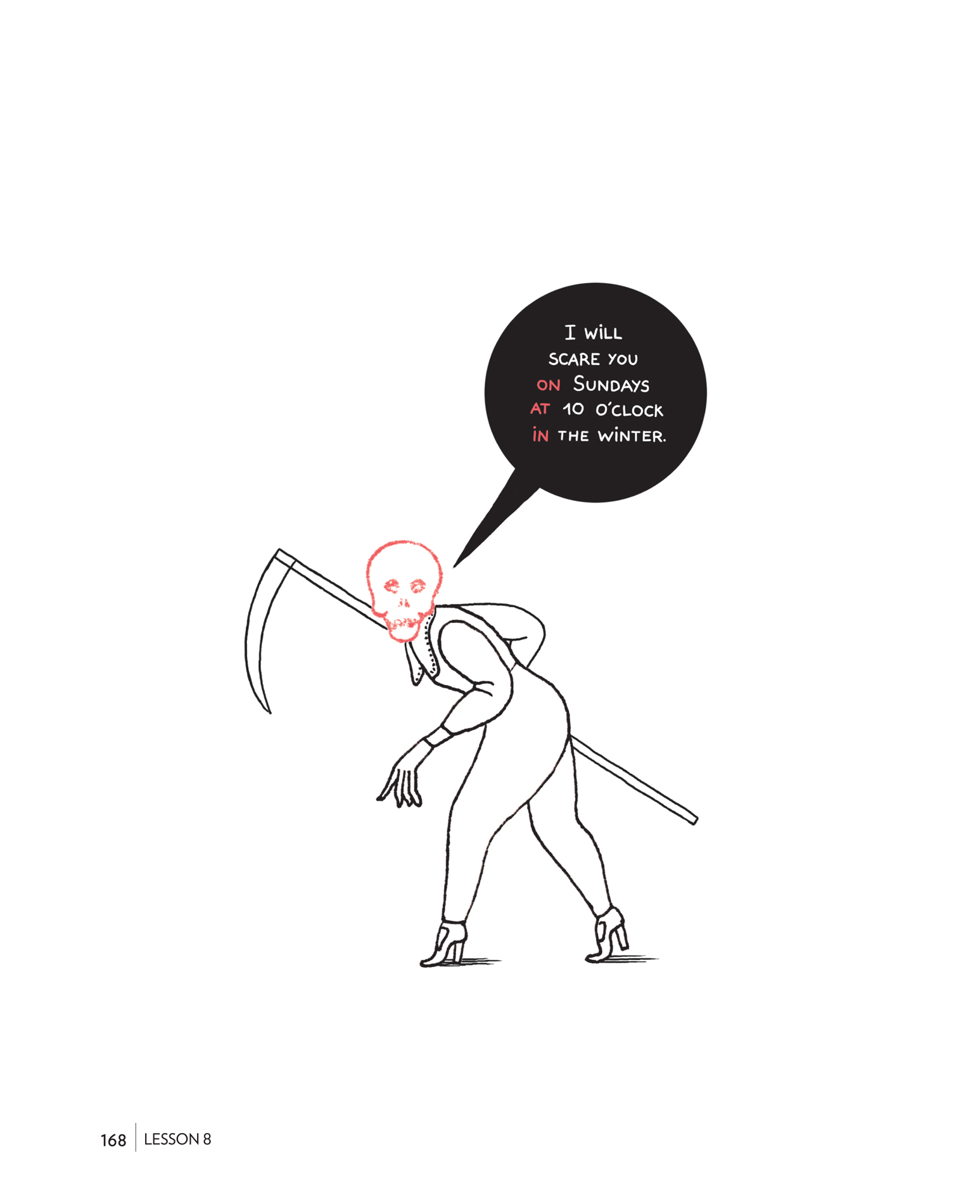
Figure 8.10: IN/ON/AT 時間介系詞 — 拿鐮刀的死神嘴裡吐出黑色對話框「I will scare you ON Sundays AT 10 o'clock IN the winter.」
| 介系詞 | 核心意義 | 例子 |
|---|---|---|
| IN | 月份、季節、年代、世紀 | in April / in summer / in 1900 | in the 1900s / in the past century / in the future |
| ON | 日子和日期 | on Sunday / on Mondays / on the 4th of September / on his birthday / on New Year’s Eve |
| AT | 時鐘上的時刻、時間點 | at five o’clock / at noon | night / at bedtime / at the moment / at the end of the week |
常見搭配(Common Expressions)
- in:in the morning(s), in the afternoon(s), in the evening(s)
- on:on Tuesday morning(s), on Wednesday afternoon(s)
- at:at night, at Christmas, at the weekend, at the same time
句子裡用了 LAST、NEXT、EVERY、THIS 這四個字時,不要再加 in / on / at。
- I was depressed last May.(不是
in last May)- I’m planning to rob a bank next Monday.(不是
on next Monday)- I eat doughnuts every Christmas.(不是
at every Christmas)- I will take a walk naked this evening.(不是
in this evening)