Lesson 7 是「形容詞(Adjective)」單元。作者先用大量人物插畫教各種形容詞——外表、個性、感受——再進到分詞形容詞、形容詞排列順序、固定搭配的介系詞片語,最後收尾在比較級、最高級與 as … as 同等比較。整課把「描述一個人事物」需要的工具一次配齊。
形容詞是這本書插畫密度最高的一課之一。建議邊翻書邊把每張插畫對應到你身邊認識的人,記憶會深刻很多。
形容詞 / Adjectives#
書中先用一行小字定義:
ADJECTIVES provide information about nouns. (形容詞用來提供名詞的資訊。)
兩條基本規則:
- 放在名詞前面:Thank God, the chatty parrot is sleeping.(謝天謝地,那隻多話的鸚鵡睡著了。)── 不能說 the parrot chatty。
- 不隨單複數變化:Blacky is my black cat. I have eight black cats and I’m still lucky.(Blacky 是我的黑貓。我有八隻黑貓,但我還是很幸運。)── 不論一隻或八隻,都用 black,不加 s。
接下來書中用插畫把形容詞分成幾大組:
外表(Appearance)── 對比組
- tall — 高 / short — 矮(封面:一個高個子配一個矮個子)
- fat — 胖 / slim — 苗條(一對情侶坐在一起)
- big — 大 / medium — 中 / small — 小(書中用三位女子的胸部尺寸示範,作者一貫的調皮畫風)
- beautiful — 漂亮(金髮 blonde 媽媽)
- handsome — 帥(多毛 hairy 爸爸)
- ugly — 醜(長雀斑 freckly 的女兒)
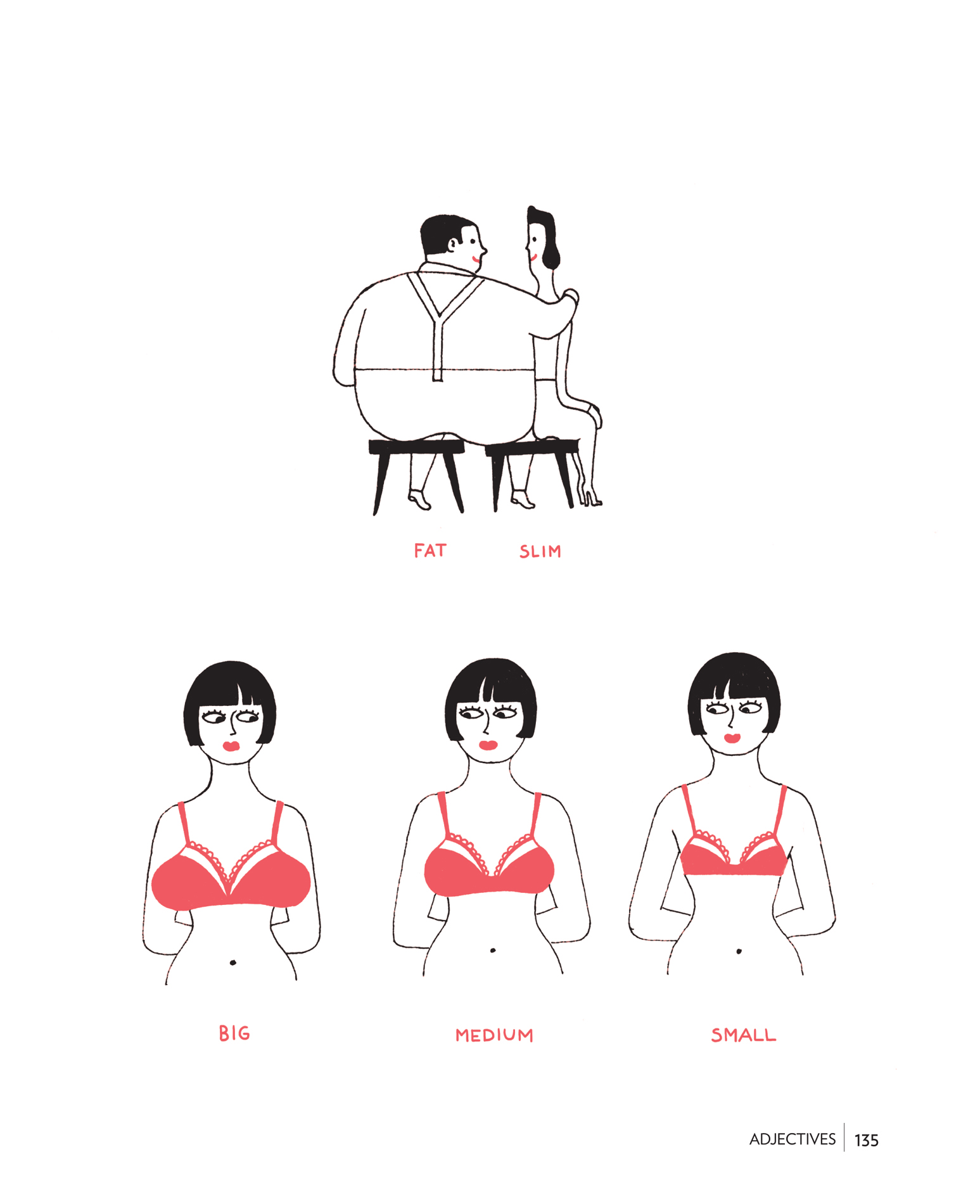
Figure 7.1: 外表對比 — fat / slim / big / medium / small
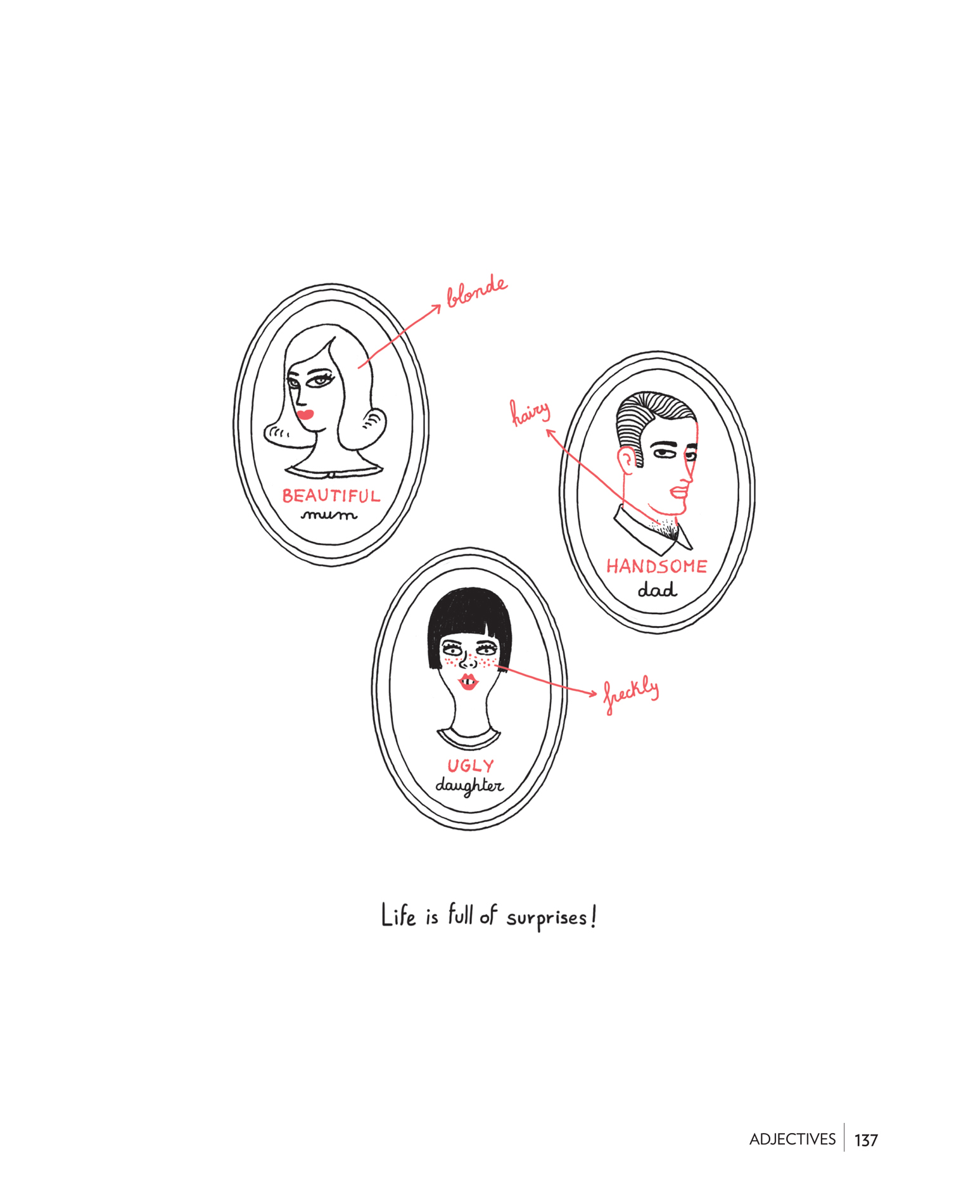
Figure 7.2: 三肖像 — beautiful mum、handsome dad、ugly daughter
配上這三張橢圓畫框肖像,作者寫了一句註解:Life is full of surprises!(人生充滿驚喜!)── 暗示帥爸配美媽不一定生出漂亮女兒。
個性(“You can be…")
書中用一連串小漫畫畫出各種個性形容詞,搭配一份小辭典:
- polite — 有禮貌的(脫帽行禮)
- dishonest — 不誠實的(鼻子變長像皮諾丘)
- grumpy — 脾氣壞、易怒
- chatty — 多話的(嘴巴一直 blah blah blah)
- arrogant — 自大的:having an exaggerated sense of one’s importance or ability
- brave — 勇敢的:possessing courage
- calm — 冷靜的:not feeling nervous
- clever — 聰明的:showing sharp intelligence
- crazy — 瘋狂的
- wise — 有智慧的(戴眼鏡讀報、抽煙斗的老人)
- distrustful — 多疑的
- enthusiastic — 熱情的:having great excitement and interest
- envious — 嫉妒的:painfully desiring what someone else has
- friendly — 友善的:warm, comforting
- funny — 風趣的:causing laughter or amusement
- lonely — 孤單的:without companion(s)
- nice — 親切的:kind, friendly
- sarcastic — 諷刺的:using words in a way that is contrary to their meaning
- silly — 傻的:foolish, lacking common sense
- witty — 機智的:using quick and verbal humour
- tough — 粗獷/強硬的(叼煙的硬漢側臉)
- optimistic — 樂觀的(豎大拇指)
- gossipy — 愛八卦的(兩個女人附耳竊竊私語)
- jealous — 忌妒的
- girly — 少女系的(穿兔耳髮箍與紅裙)
- but wicked — 但很壞(小女孩偷踩小貓尾巴)
- lazy — 懶散的(整個人攤成一團)
- shy — 害羞的
- vain — 愛慕虛榮的(拿著小鏡子照自己)
- selfish — 自私的(佔了兩張椅子滑手機)
- gluttonous — 貪吃的(大肚子捧著一堆食物)
- perverted — 變態的(西裝男子偷瞄路過女子)
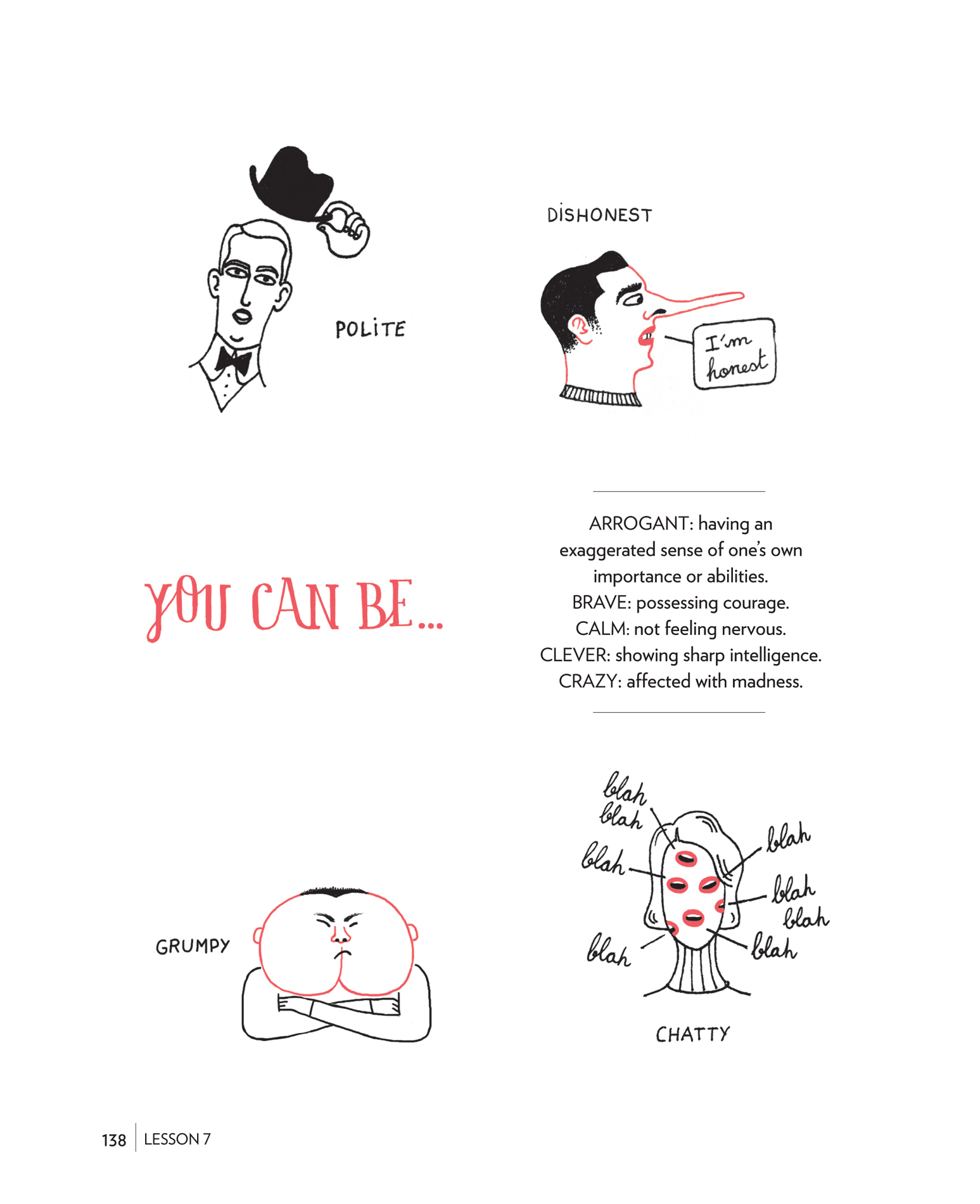
Figure 7.3: 個性形容詞 — polite / dishonest / grumpy / chatty
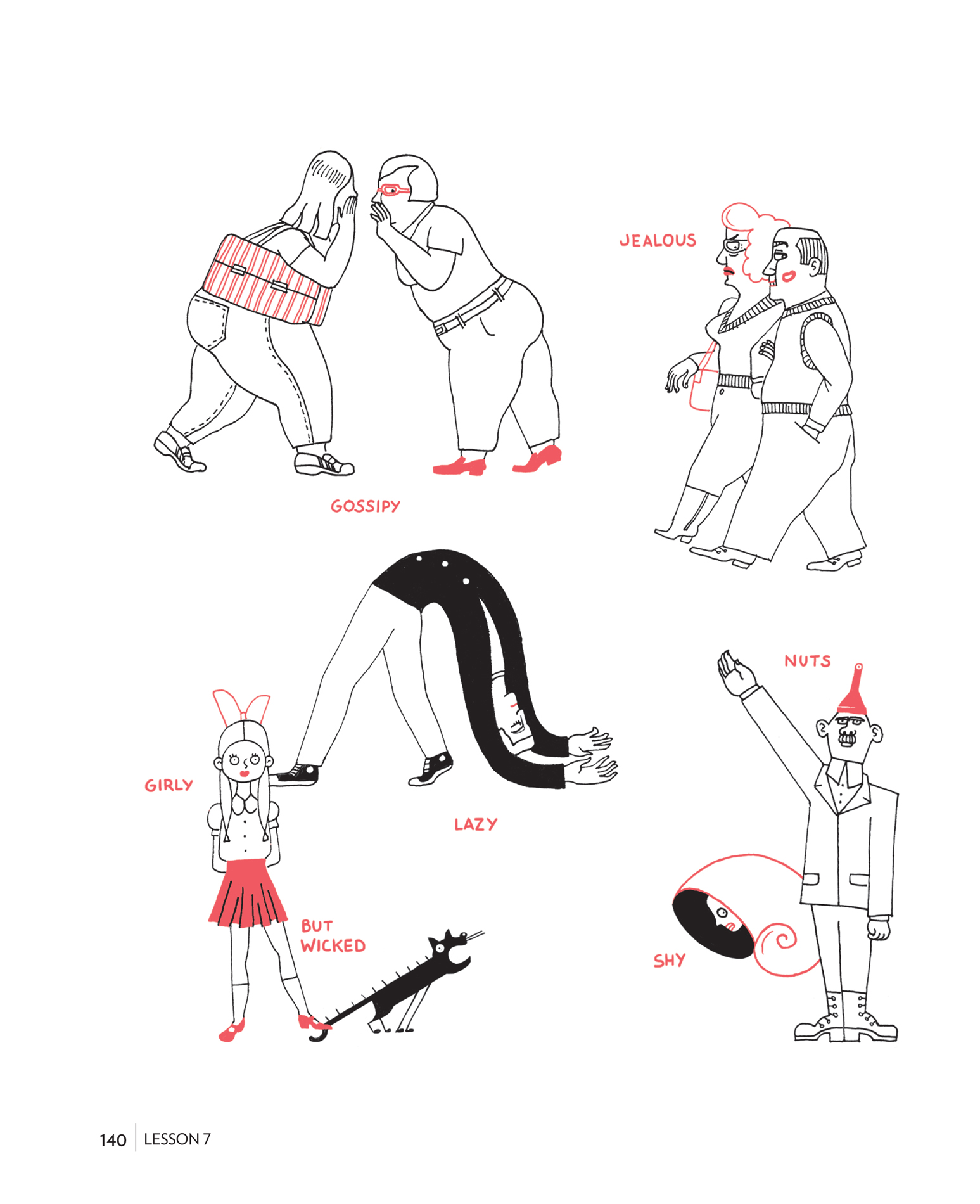
Figure 7.4: 個性形容詞 — gossipy / jealous / girly but wicked / lazy / shy
身心狀態(“You can feel…")
- upset / angry — 心煩、生氣(頭頂兩朵烏雲打閃電)
- sad — 難過(眼淚成河)
- warm — 溫暖(戴毛帽圍圍巾)
- hot — 熱(噴出火)
- cold — 冷(整個頭凍成冰塊)
- hungry — 餓(看到食物 mmmm!)
- thirsty — 渴
- happy — 快樂(咧嘴大笑)
- depressed — 沮喪(頭垂得像枯萎的花)
- anxious — 焦慮的:experiencing unease or nervousness
- ashamed — 羞愧的:feeling embarrassment
- cool — 涼的:having a moderately low temperature
- disturbed — 心神不寧的:showing signs or symptoms of mental or emotional illness
- dizzy — 暈眩的:having a sensation of losing one’s balance
- healthy — 健康的:possessing good health
- ill — 生病的:unhealthy, sick
- sleepy — 想睡的:needing or ready for sleep
- uneasy — 不自在的:feeling troubled or uncomfortable
- worried — 擔心的:feeling uneasy about something
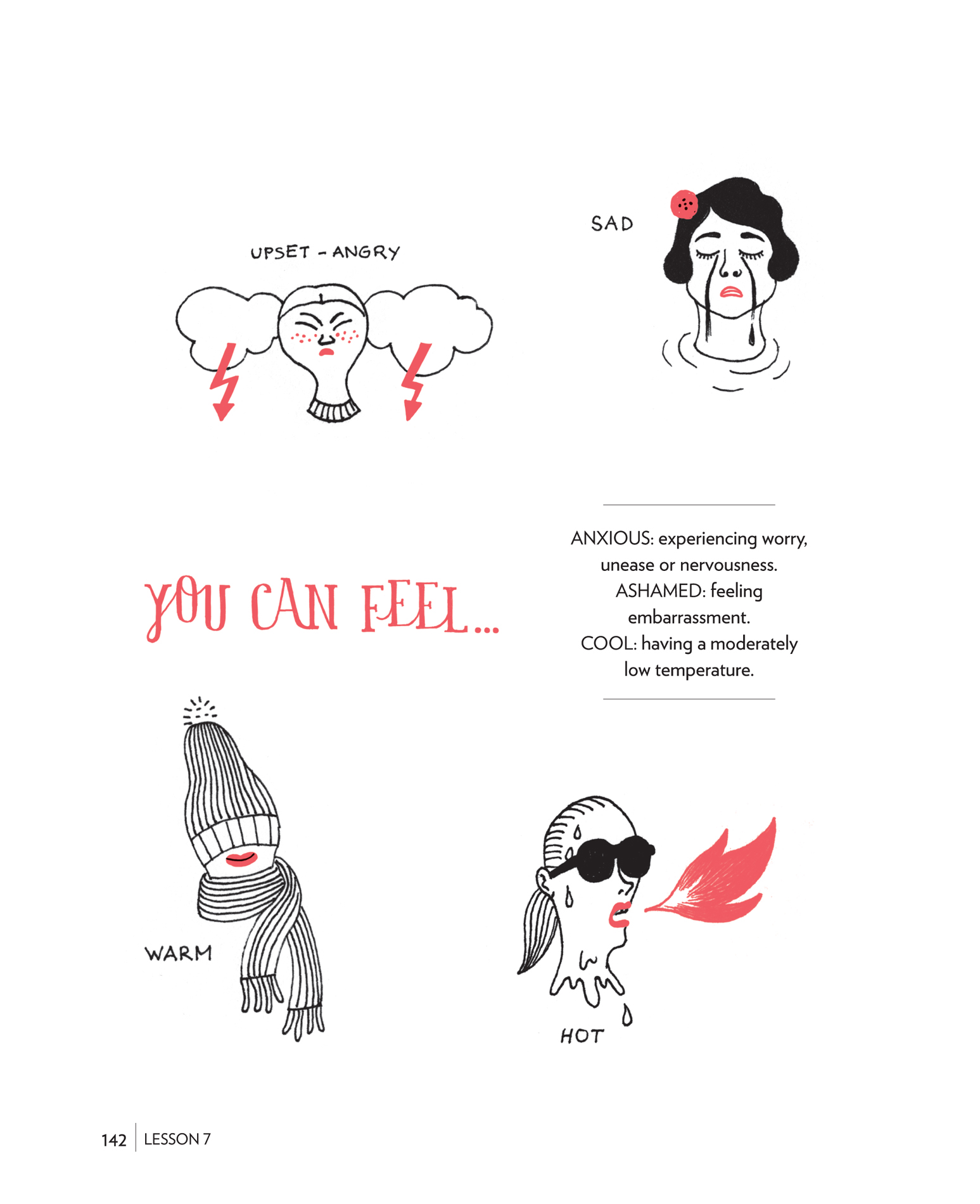
Figure 7.5: 感受形容詞 — upset/angry、sad、warm、hot
書中把個性與感受的形容詞都附上英文小辭典條目,這對學單字非常有幫助 ── 直接用英文解釋,避免中文翻譯造成的誤差。
分詞形容詞 / Participial Adjectives#
這是華人學英文最常搞混的點之一:-ED 是「人感受到」,-ING 是「事物本身造成」。
書中用一張插畫鋪陳這個對比:一位看起來無聊的女子說 I am bored.(我覺得無聊。)旁邊的氣泡卻吐槽 Only boring people get bored.(只有無趣的人才會覺得無聊。)── 同一個 bore,前者是她的感受(bored),後者是別人的本質(boring)。
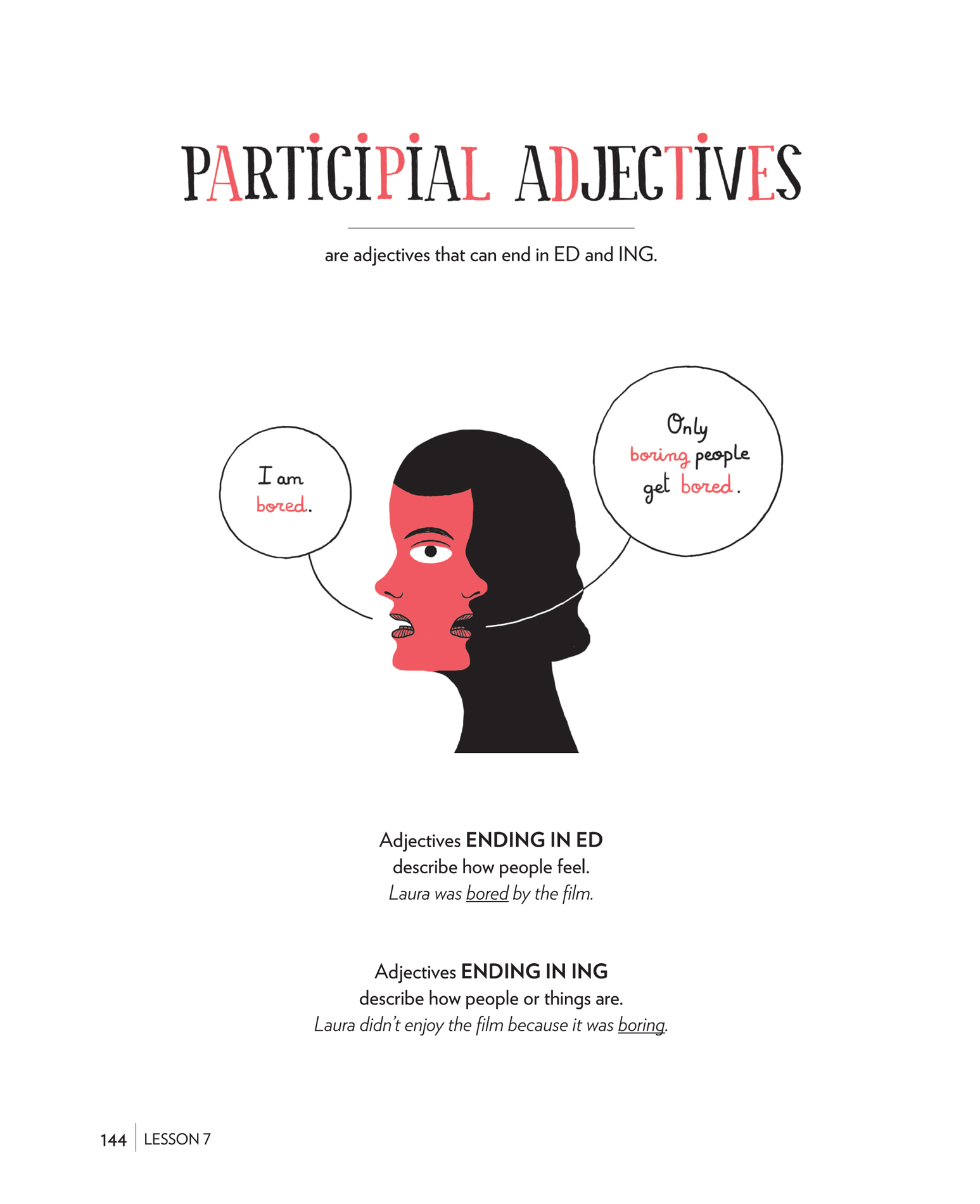
Figure 7.6: 分詞形容詞 — bored vs. boring 對比
規則整理:
| 結尾 | 描述對象 | 意思 | 例句 |
|---|---|---|---|
| -ED | 人的感受 | feel… | Laura was bored by the film.(Laura 被那部片無聊到了。) |
| -ING | 事物或人的本質 | causes… | Laura didn’t enjoy the film because it was boring.(Laura 不喜歡那部片,因為它很無聊。) |
書中列出常見的成對分詞形容詞:
| -ED(feeling…) | -ING(causing…) |
|---|---|
| amazed(驚奇的) | amazing(令人驚奇的) |
| amused(被逗樂的) | amusing(有趣的) |
| annoyed(被惹惱的) | annoying(煩人的) |
| bored(無聊的) | boring(令人無聊的) |
| confused(困惑的) | confusing(令人困惑的) |
| disappointed(失望的) | disappointing(令人失望的) |
| excited(興奮的) | exciting(令人興奮的) |
| frightened(害怕的) | frightening(嚇人的) |
| interested(有興趣的) | interesting(有趣的) |
| irritated(被激怒的) | irritating(惱人的) |
| surprised(驚訝的) | surprising(令人驚訝的) |
| thrilled(興奮激動的) | thrilling(令人激動的) |
形容詞順序 / Adjective Order#
當你要用兩個以上的形容詞修飾同一個名詞,必須照英文的固定順序排列,否則就算每個字都對也會聽起來怪怪的。
書中用一張圖把順序「從 1 排到 8」:
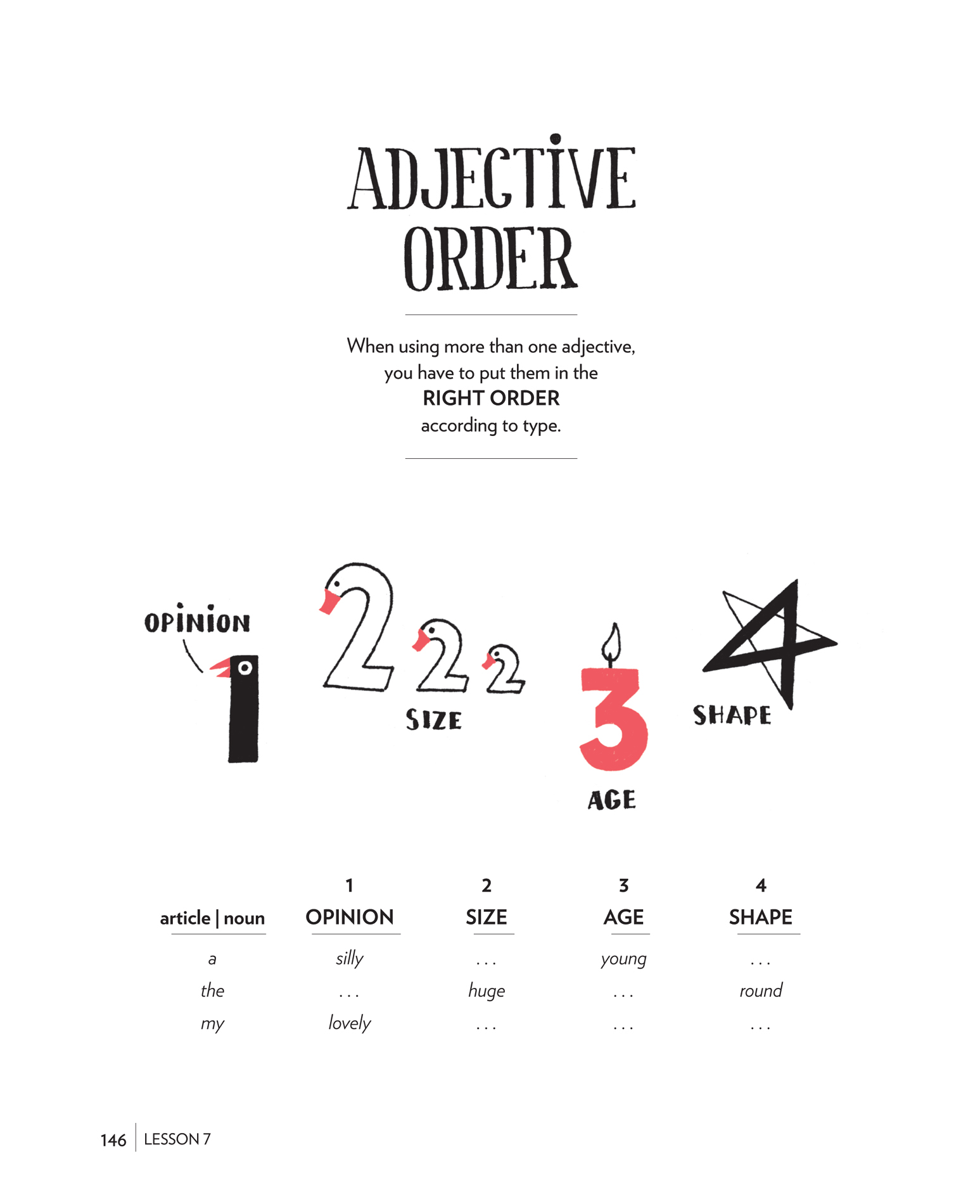
Figure 7.7: 形容詞順序 1–4 — Opinion / Size / Age / Shape
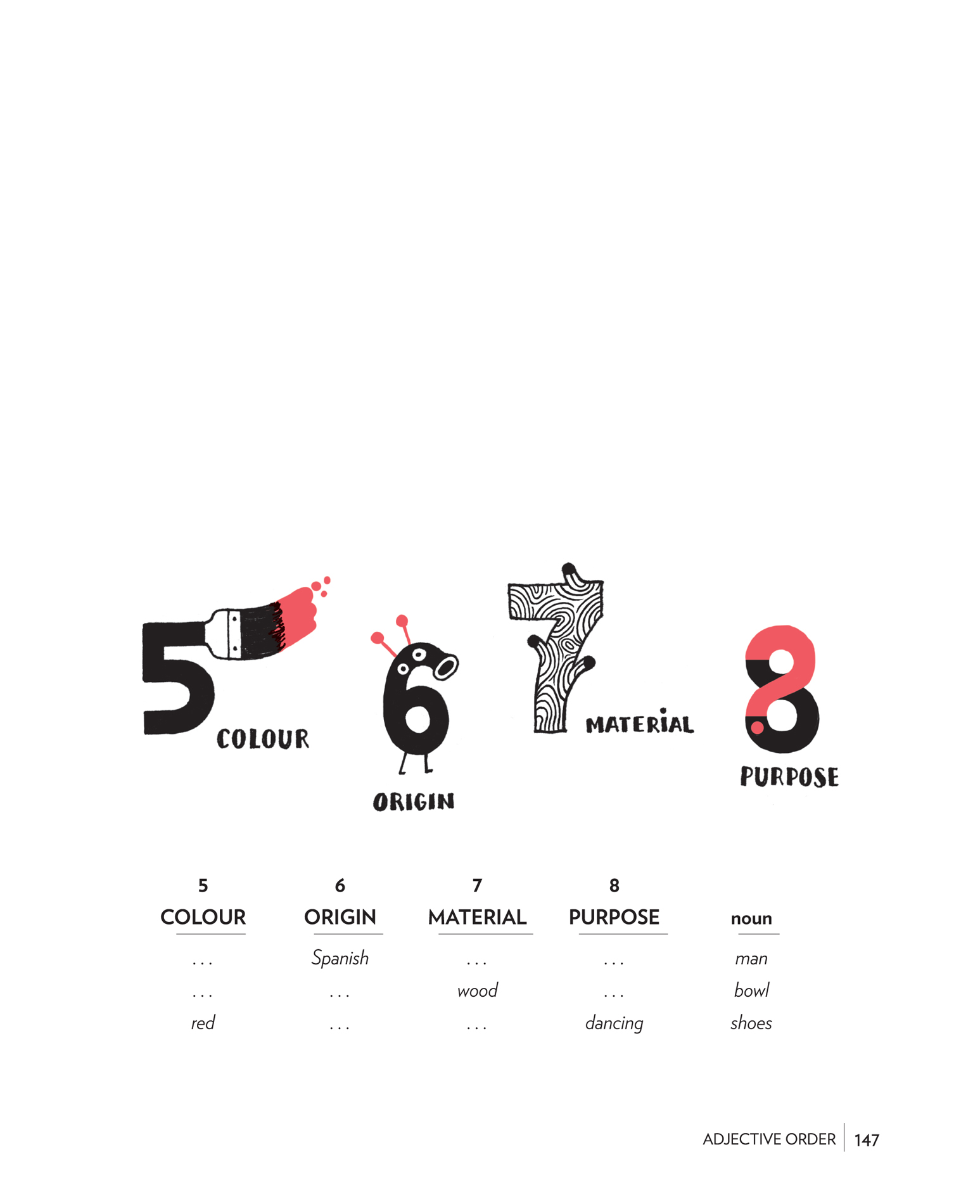
Figure 7.8: 形容詞順序 5–8 — Colour / Origin / Material / Purpose
- OPINION(個人主觀評價)── 例:silly, lovely
- SIZE(尺寸)── 例:huge
- AGE(年齡)── 例:young
- SHAPE(形狀)
- COLOUR(顏色)── 例:red
- ORIGIN(來源/國籍)── 例:Spanish
- MATERIAL(材質)── 例:wood
- PURPOSE(用途)── 例:dancing(書中以 dancing shoes 為例)
排在最前面的還有 article 或所有格(a / the / my),最後接名詞。
一個好記的順序口訣:Opinion → Size → Age → Shape → Colour → Origin → Material → Purpose → Noun。例如 my lovely huge young red Spanish wooden dancing shoes(雖然實務上很少這樣堆,但每加一個都要按順序往後)。
形容詞 + 介系詞片語 / Adjective + Preposition Expressions#
許多形容詞後面有固定要搭配的介系詞,這些組合必須整組記。
書中用一群鵝在柵欄前的插畫帶出第一個例子:We are FED UP WITH crumbs. We want cheese, we want chocolate, and we want mint…(我們受夠麵包屑了,我們要起司、要巧克力、要薄荷……)── fed up with 意思是「無法或不願再忍受某情境」。
接著是三組常見搭配:
- ATTACHED TO — 對某物有強烈情感依附(fond of) Everyone has a weakness, even those who look strong. This guy is very attached to his dummy.(每個人都有軟肋,連看起來堅強的人也是。這位先生非常迷戀他的奶嘴。)
- HOOKED ON — 上癮(addicted to) I’m hooked on coffee.(我對咖啡上癮。)
- FASCINATED BY — 著迷於(compelled by or attracted to) I’m fascinated by science fiction.(我著迷於科幻。)
書中右側有一整排「常見形容詞 + 介系詞」清單(首字母依字母順序排列:addicted、afraid、angry、anxious、ashamed、attached、aware、bad at、bored、capable、careful、conceited、crazy、curious、different、excited、fascinated、fed up、glad、good、happy、hooked、interested、nervous、obsessed、proud、ready、safe from、satisfied、sick of、sorry、terrible、tired of、worried…),但這個清單在原書 PDF 右側文字被裁掉,對應的介系詞看不清楚。建議查字典補上每個形容詞慣用的介系詞(如 afraid of, angry with, good at, interested in, proud of, tired of, worried about)。
比較級與最高級 / Comparatives and Superlatives#
書中用兩位女生坐長椅的對話開場:左邊說 YOU ARE OLDER THAN ME.(你比我老。)右邊回 I’M MORE BEAUTIFUL.(我比較漂亮。)── 一句帶出兩種比較級的構成方式。
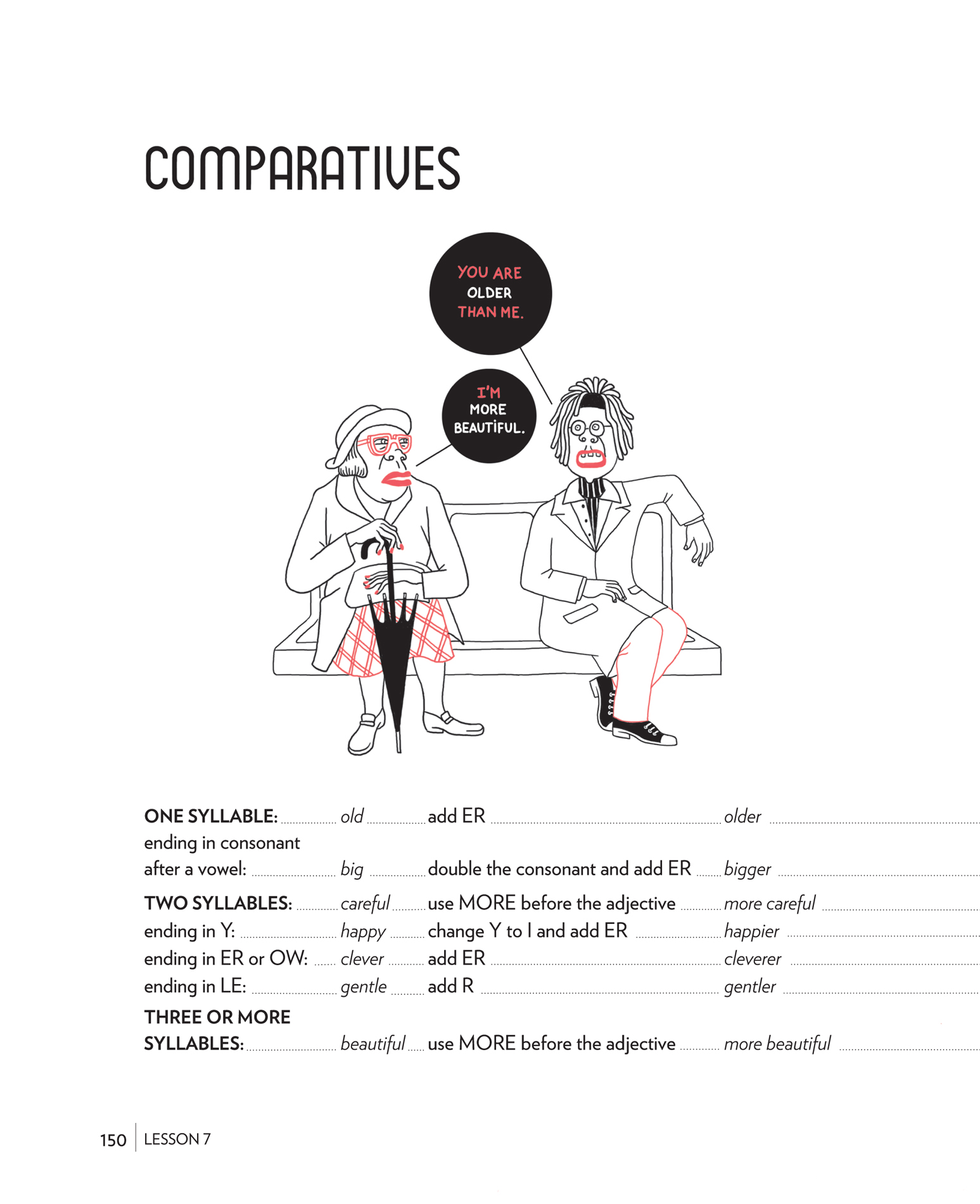
Figure 7.9: 比較級規則 — older vs. more beautiful
比較級規則#
| 音節 | 變化規則 | 例字 → 比較級 |
|---|---|---|
| 一個音節 | + ER | old → older |
| 一個音節,子音前一個母音 | 雙寫子音 + ER | big → bigger |
| 兩個音節 | 前面加 MORE | careful → more careful |
| 兩個音節,結尾 -Y | Y 改 I + ER | happy → happier |
| 兩個音節,結尾 -ER 或 -OW | + ER | clever → cleverer |
| 兩個音節,結尾 -LE | + R | gentle → gentler |
| 三個音節以上 | 前面加 MORE | beautiful → more beautiful |
最高級規則#
書中以 I AM THE BEST. YOU ARE THE MOST HANDSOME. YOU ARE THE NICEST. THE CUTEST GUY! 一張圖示範各種最高級用法。規則和比較級對應:
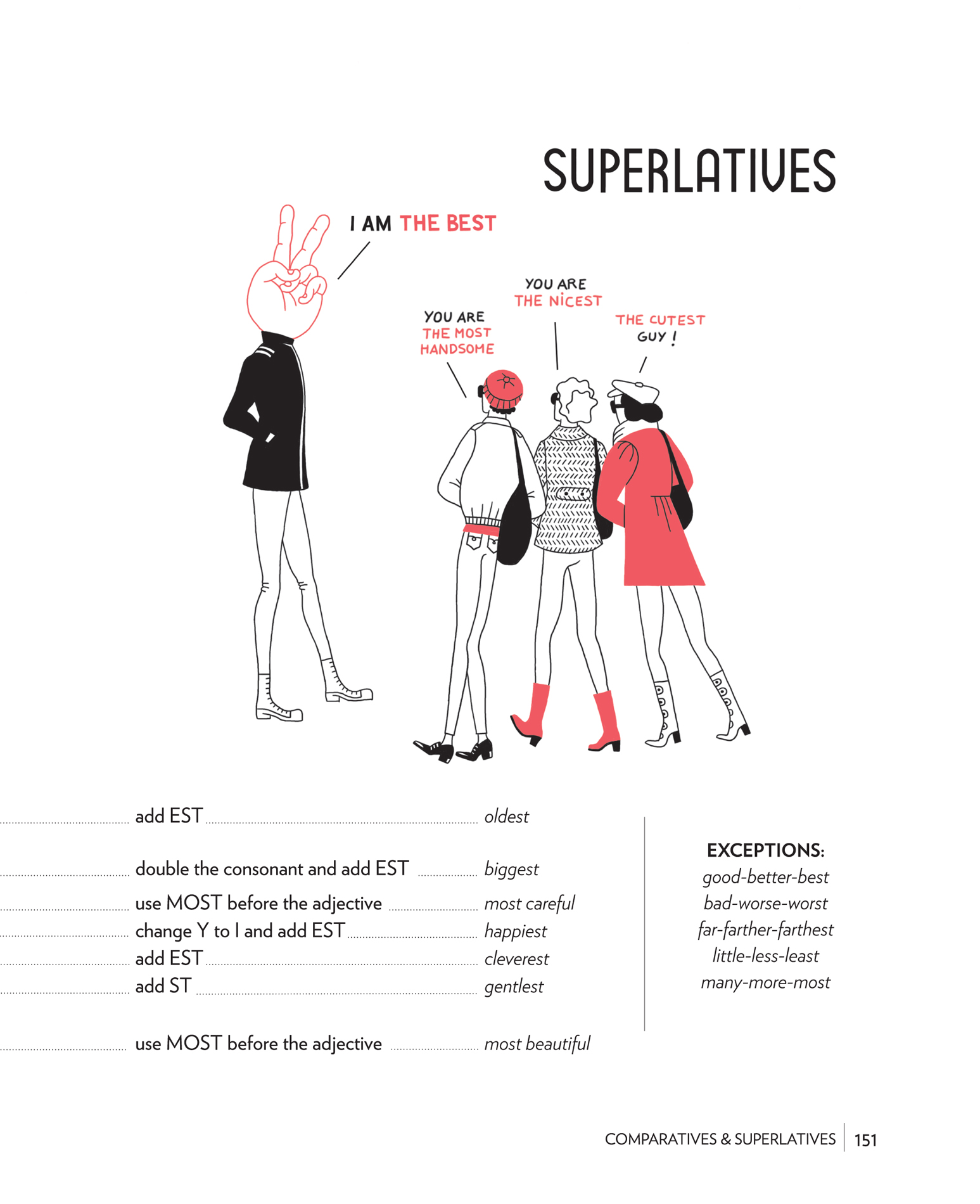
Figure 7.10: 最高級規則與不規則例外
| 音節 | 變化規則 | 例字 → 最高級 |
|---|---|---|
| 一個音節 | + EST | old → oldest |
| 一個音節,子音前一個母音 | 雙寫子音 + EST | big → biggest |
| 兩個音節 | 前加 MOST | careful → most careful |
| 兩個音節,結尾 -Y | Y 改 I + EST | happy → happiest |
| 兩個音節,結尾 -ER | + EST | clever → cleverest |
| 兩個音節,結尾 -LE | + ST | gentle → gentlest |
| 三個音節以上 | 前加 MOST | beautiful → most beautiful |
不規則變化(EXCEPTIONS)#
書中右側有一組例外清單,以下幾個原型字在 PDF 右側被裁切,但補回常見答案:
- good → better → best(好/更好/最好)
- bad → worse → worst(壞/更壞/最壞)
- far → farther / further → farthest / furthest(遠/更遠/最遠)
- little → less → least(少/更少/最少)
- many / much → more → most(多/更多/最多)
書中只露出原型字首與小破折號(good-, bad-, far-fa…, litt…, man…),右側的比較級與最高級被裁掉。上面五個是英語最常見的不規則組,請以此為準。
同等比較 / As … As#
as … as 用來比較程度相等的兩件事。
書中用一張連體雙胞胎插畫示範:左邊說 SHE IS AS OLD AS ME. SHE IS AS BEAUTIFUL AS ME.(她和我一樣大,她和我一樣漂亮。)右邊回 BUT THERE IS A SMALL DIFFERENCE. I’M NOT AS STUPID AS SHE IS.(但有一點點不同 ── 我可沒她那麼笨。)
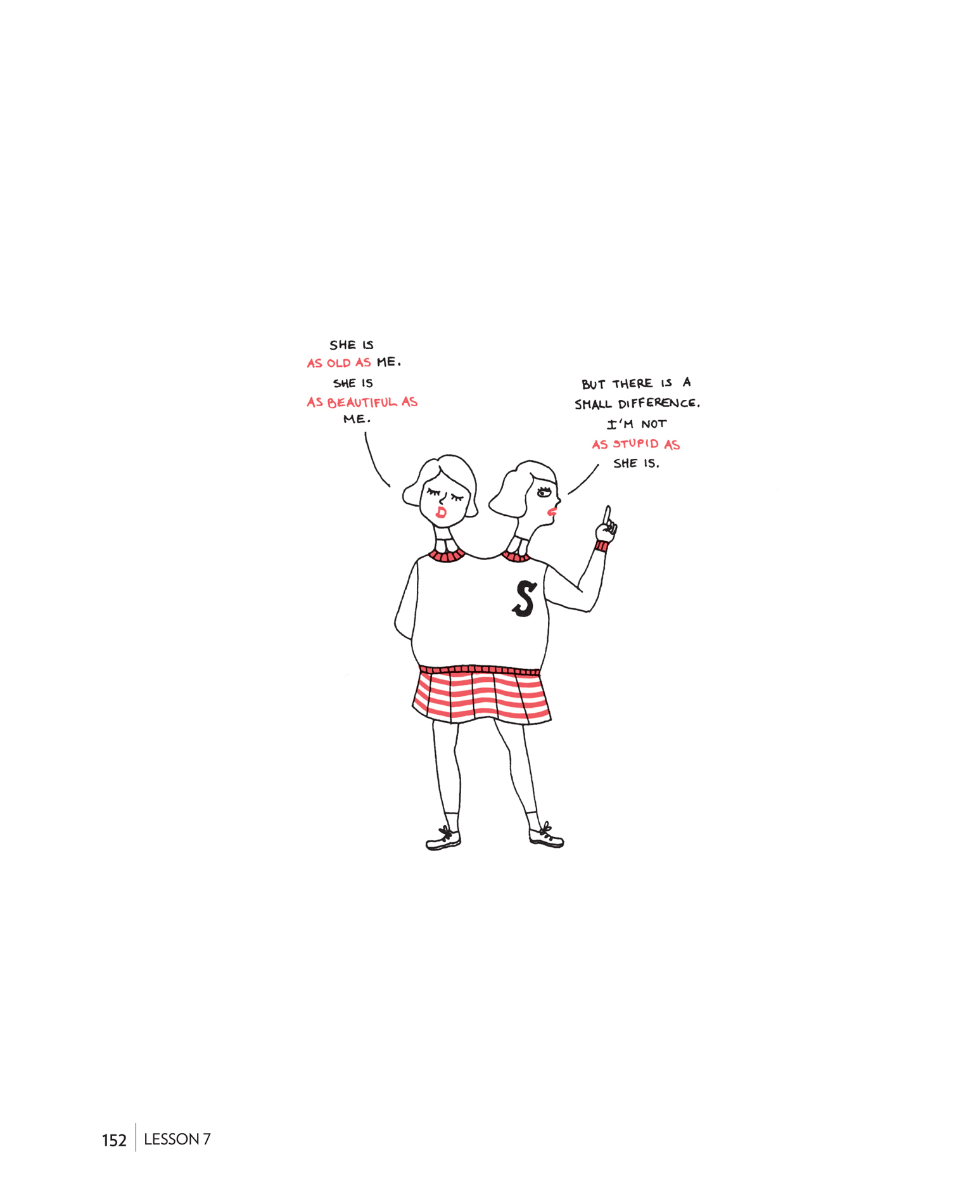
Figure 7.11: As...As 同等比較 — 連體雙胞胎範例
用法重點:
- 肯定句(表達相等):She is as old as me / I (am).(她和我一樣大。)
- 否定句:I’m not as stupid as her / she (is).(我沒她那麼笨。)
- 疑問句:Is she as beautiful as me / I (am)?(她和我一樣漂亮嗎?)
口語中受詞代名詞(me, her, him)非常常見;正式書寫則用主格 + 動詞(I am, she is, he is)。