本課以動詞為主軸,透過大量手繪插畫帶出英文中最常用的動詞詞彙,最後以「祈使句(the Imperative)」收尾。整個章節分成兩大區塊:Vocabulary: Verbs(動詞字彙,p80–93)與 the Imperative(祈使句,p94–99)。
本書以插畫對照單字(每個動詞通常配一張插圖 + 英文標籤)。下列清單依書中分組與出場順序整理,例句保留原文。
動詞字彙(Vocabulary: Verbs)#
移動類動詞(p80–81)#
書本以一個跨頁的小劇場帶出基本移動動詞:女子走在街上、男孩跳躍、有人游泳、奔跑、騎馬。
- to walk(走路)
- to jump(跳)
- to swim(游泳)
- to run(跑)
- to ride(騎)
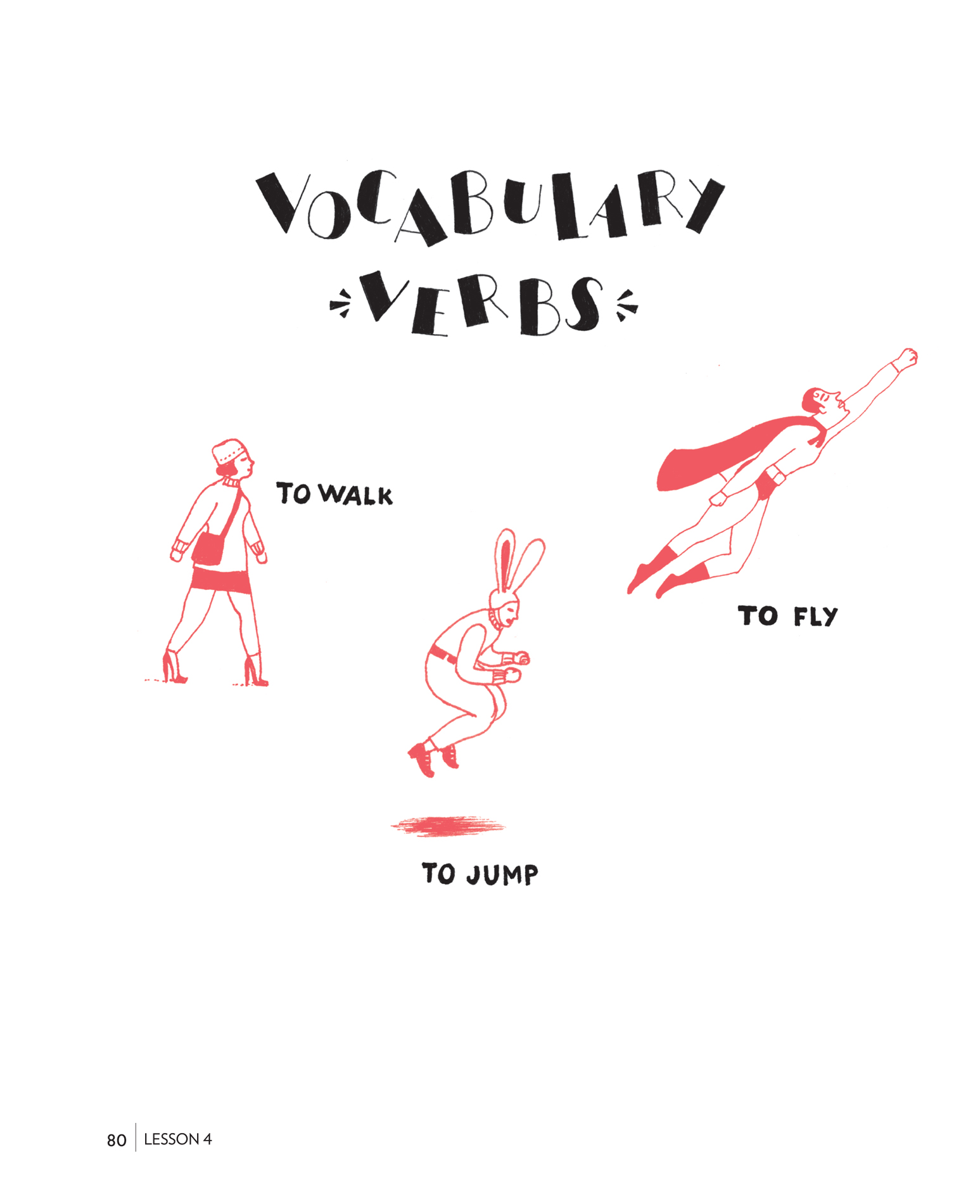
Figure 4.1: 章節開場——walk / jump / fly
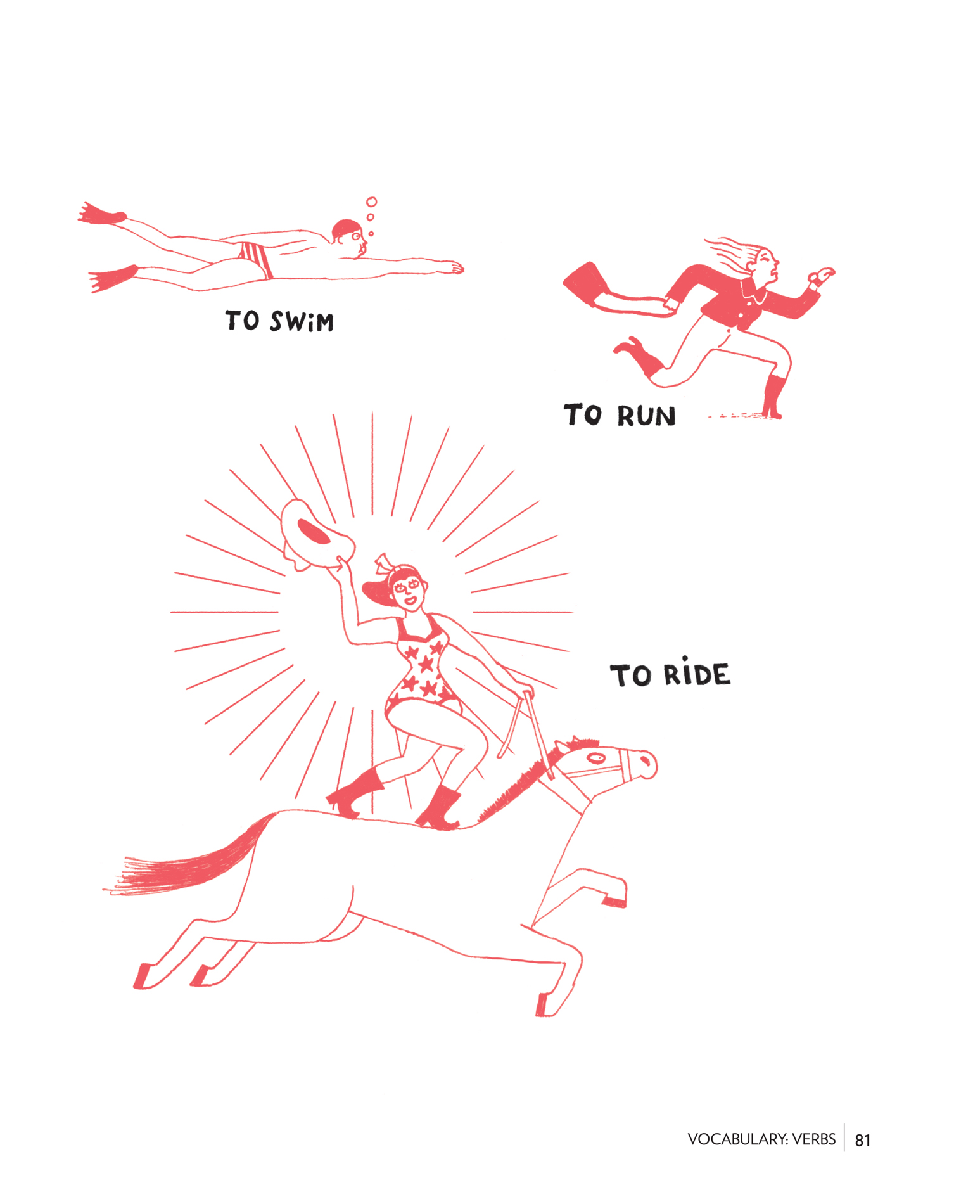
Figure 4.2: 移動動詞——swim / run / ride
教堂場景動詞(p82–83)#
整個跨頁是一個教會聚會的畫面,把好幾個動詞串在一起。
- to play — Mrs Parker plays the piano every Sunday.
- to pray — They pray to one God.
- to dance — Mrs Richardson dances effusively…(後文被裁切)
- to sing — Mrs White sings with a deep voice.
- to stand — Mr Adams likes to stand at the back of the church to see everything.
旁邊還畫了「HALLELUJAH!」的對話框,呼應禮拜場景。
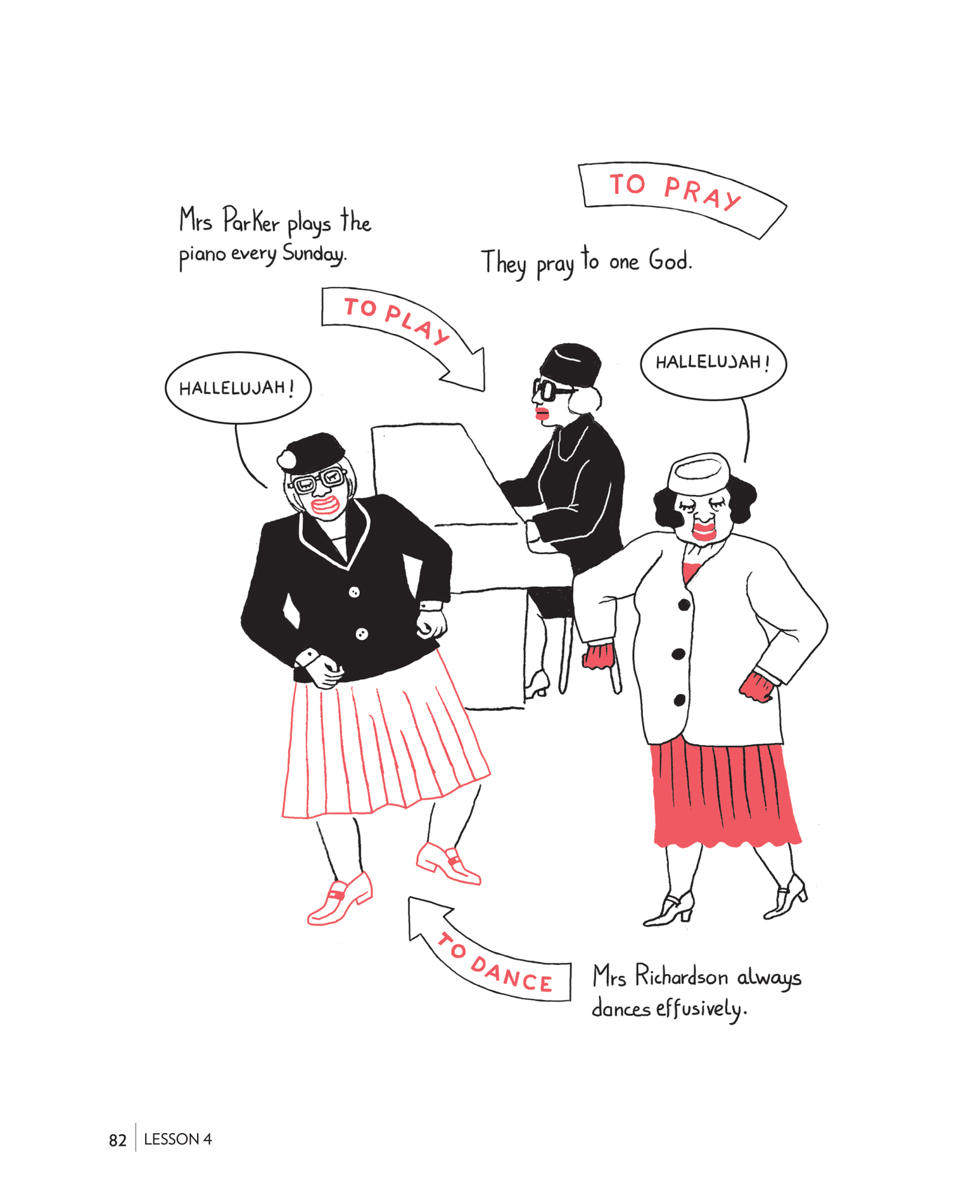
Figure 4.3: 教堂場景——play / pray / dance
互動類動詞(p84–85)#
這個跨頁聚焦在人與人之間的互動,畫出夫妻爭吵、擁抱、擲盤、休息等動作。
- to argue(爭吵)
- to hug(擁抱,圖片可見但標籤被裁切,僅見 TO [H]…)
- to throw(丟)
- to rest(休息)
- to realise — The day after arguing with his wife, hugging her, getting dishes thrown at him and resting, Jeff realised he was wearing his slippers on the way home from work.
標題
這一連串動詞被串成一個小故事:Jeff 跟太太吵架、抱抱、被丟盤子、休息,最後才「realised」自己穿著拖鞋去上班——把學過的動詞全部用一次。
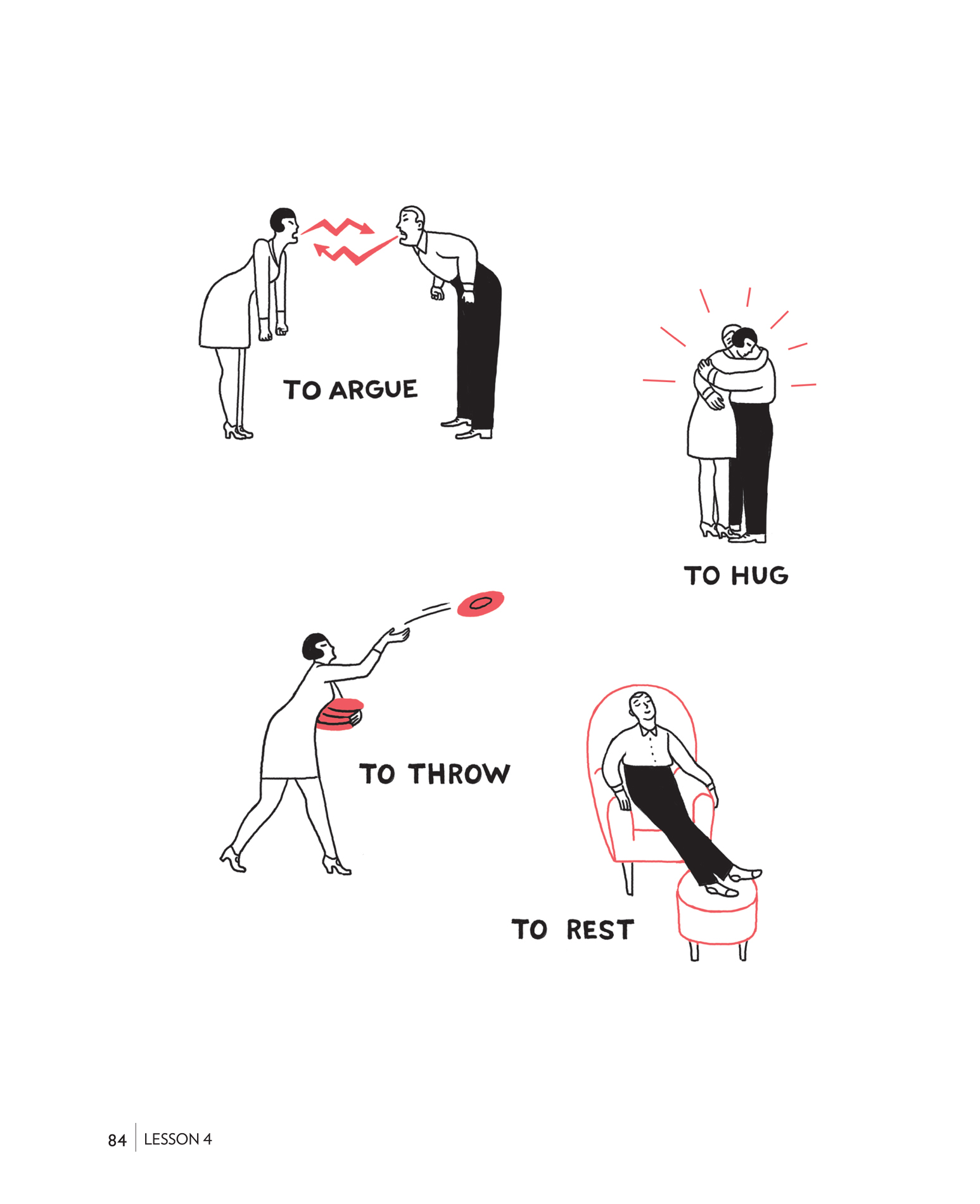
Figure 4.4: 互動類動詞——argue / hug / throw / rest
日常生活動詞(p86–87)#
「淋浴」這張大圖搭配整套衛浴詞彙:showerhead(蓮蓬頭)、tap(水龍頭)、shampoo(洗髮精)、soap(肥皂)、slippers(拖鞋)。
- to have a shower — He has a shower when he gets up, after the gym, after having sex and before goi[ng to bed]; [be]tween showers, he works in an organisation that fights global warmin[g].(諷刺:聲稱在打擊全球暖化的人卻拼命洗澡)
- to brush — She is a little dirty. She gets dirty even when she brushes her teeth.
- to comb — He usually combs his hair because his lover like[s it].(句尾被裁切)
- to wear — He wears this hat and these glasses to feel like a more interesting person.
- to undo — She is undoing the butto[ns of her] blouse to do a striptease [for her] gynaecologist.(句中被裁切)
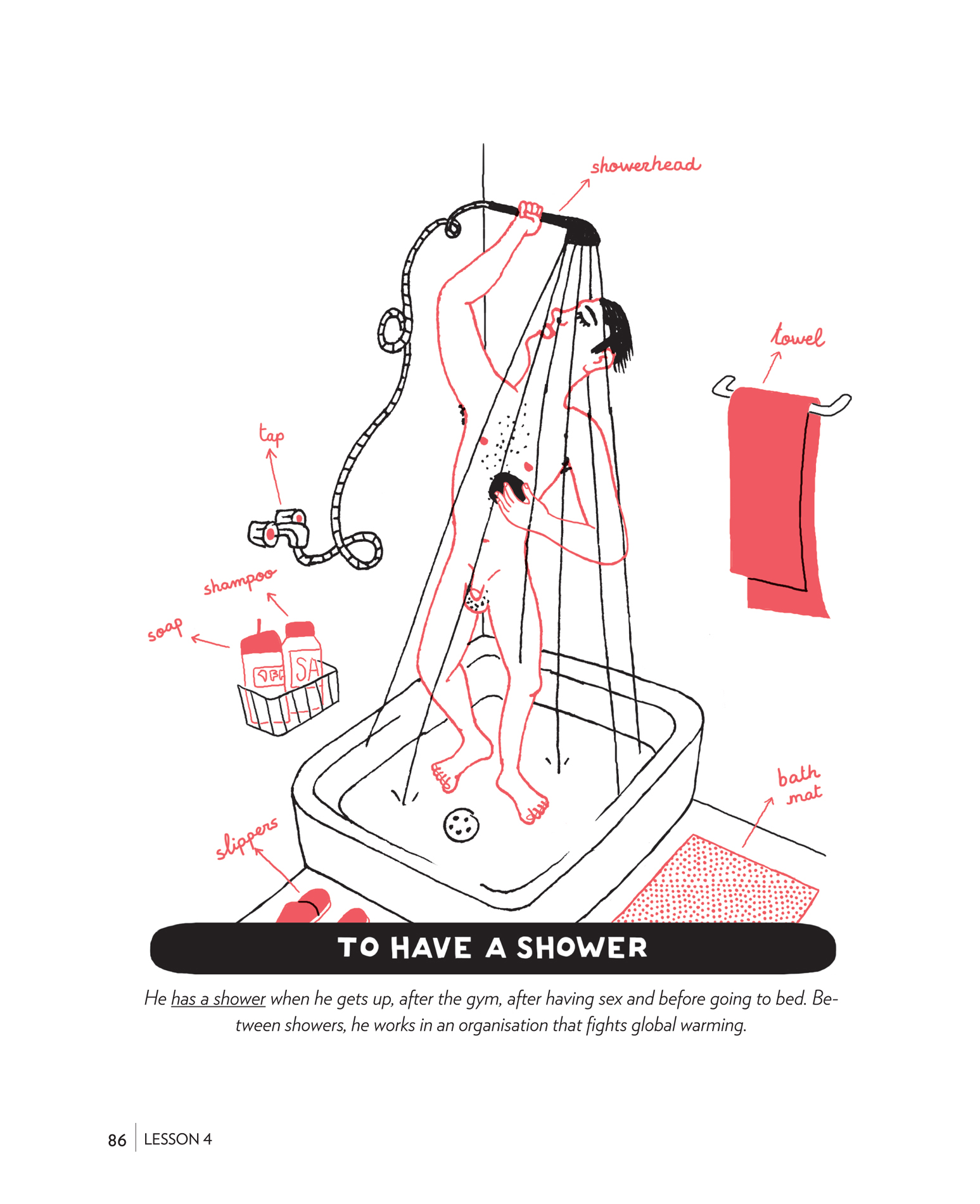
Figure 4.5: 淋浴場景與整套衛浴詞彙
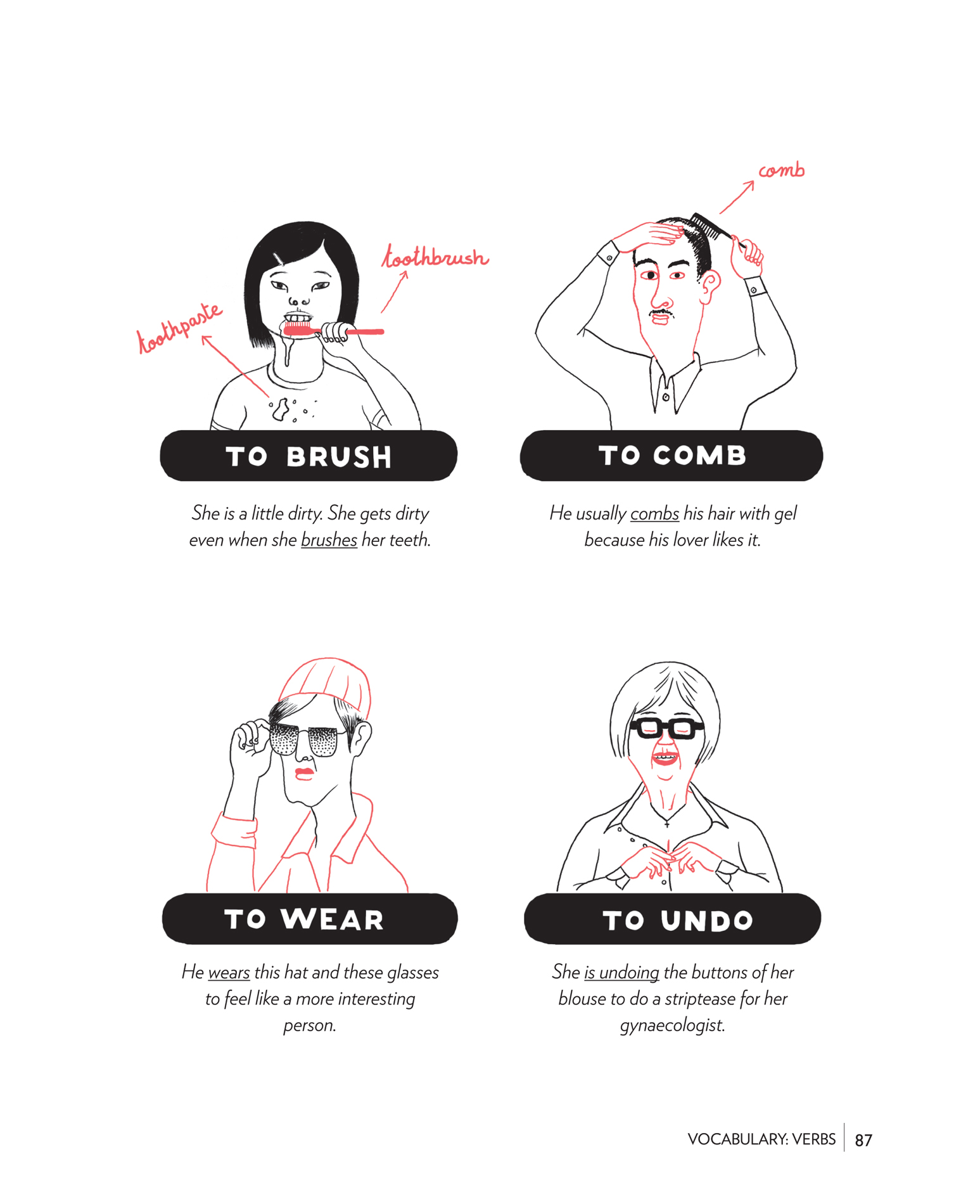
Figure 4.6: 日常動作——brush / comb / wear / undo
嘴巴可以做的事(p88–89)#
整個跨頁是一張俏皮的「Some Things You Can Do With A Foot」對照表(書中標題用語,搭配嘴部特寫的圓形插畫,是作者刻意的黑色幽默)。
- to lick(舔)
- to slobber on(流口水弄到某物上)
- to kiss(親吻)
- to suck(吸吮)
- to bite(咬)
- to daydream(白日夢;圓圈內畫面全黑,呼應「腦袋放空」的意象)
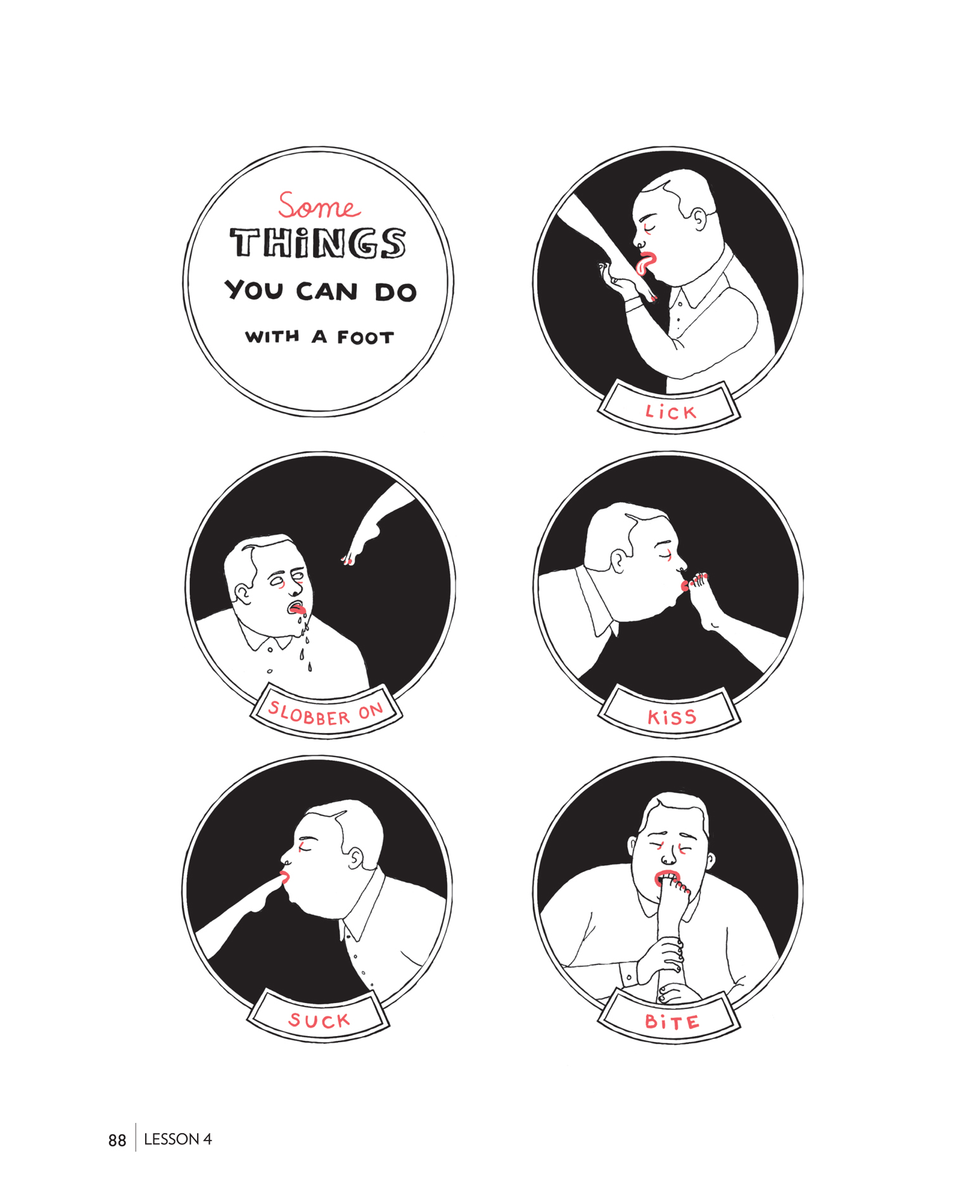
Figure 4.7: 嘴巴系列——lick / slobber on / kiss / suck / bite
to chew 的悲傷小故事(p90–91)#
獨立一個跨頁專講 to chew(咀嚼)。左頁畫三顆頭部表情變化,右頁是一段灰色幽默的小故事:
- to chew — Tim was a sensitive and delicate boy. His classmates used to laugh at him. One day after school Tim was shot by a catapult. He lost an eye. Ever since that day, Tim walks around school with a hole in his face, chewing and blowing what looks like his lost eye. Now Tim is every kid’s nightmare.
註腳
文中以 catapult 標星號註解,旁邊畫了一支彈弓圖示,提示這個英式英語單字的意思。
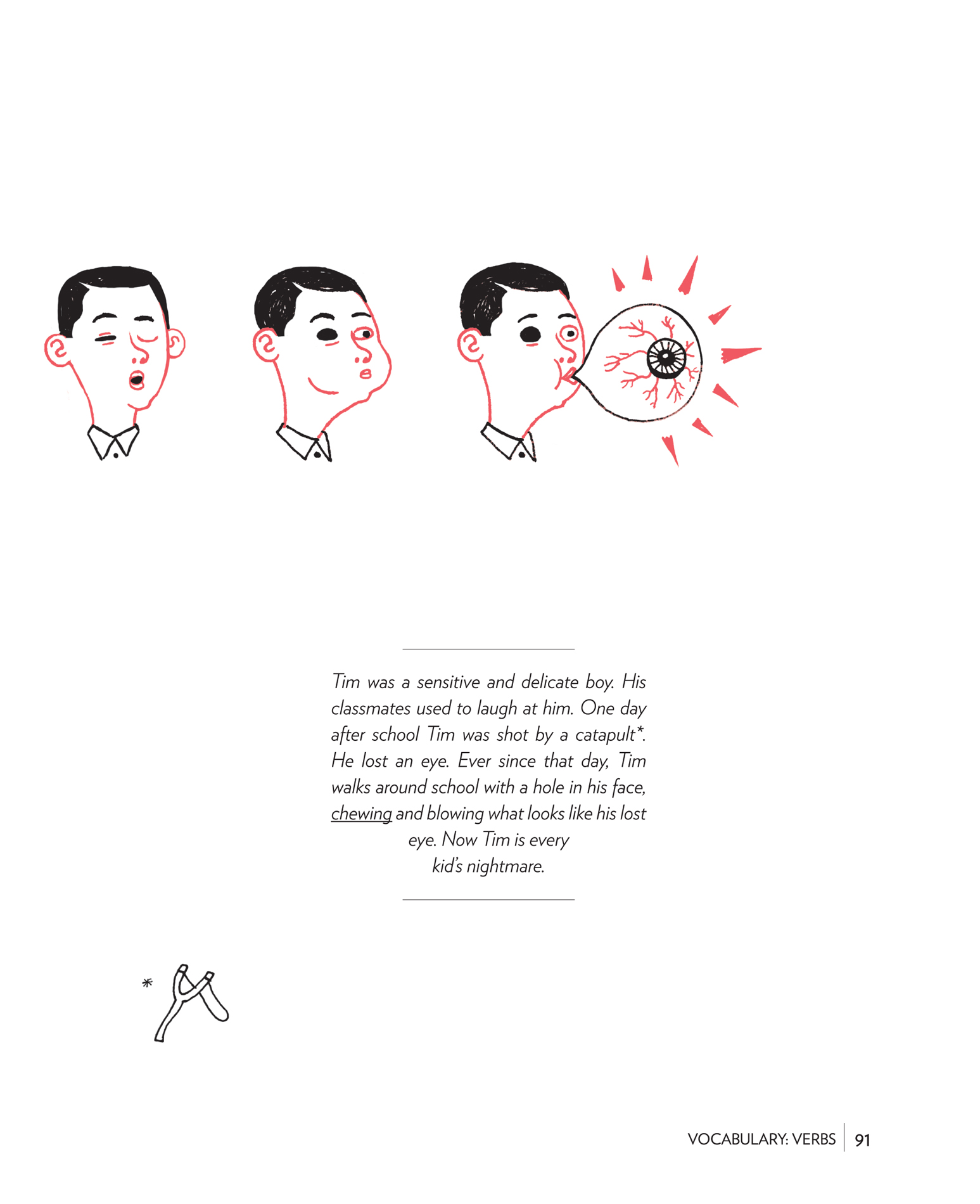
Figure 4.8: to chew——Tim 的悲傷小故事
萬用動詞 to get(p92–93)#
最後一個跨頁特別處理英文中最讓學習者頭痛的萬用動詞 to get,副標寫著:‘To get’ has a lot of meanings!
書中以一連串小情境展示 get 在不同片語裡的不同意思:
- GET tired = BECOME(變得疲累)
- GET the bus = CATCH(搭公車/趕上公車)
- GET wet = BECOME(淋濕)
- GET [溜冰跌倒] = OB…(標籤被裁切,可能是 obstacle 或 over 之類)
- GET the ball = CATCH(接到球)
- GET home = ARRIVE(抵達家裡)
- GET the lesson = UNDERSTAND(聽懂課程)
- GET the shopping = BUY(買東西)
- GET [女子拿信] = R…(標籤被裁切,推測是 RECEIVE)
標題
to get 是英文中最「混血」的動詞之一,可以代表 become、catch、arrive、understand、buy、receive 等多種意思,必須靠搭配的受詞或情境來判斷。
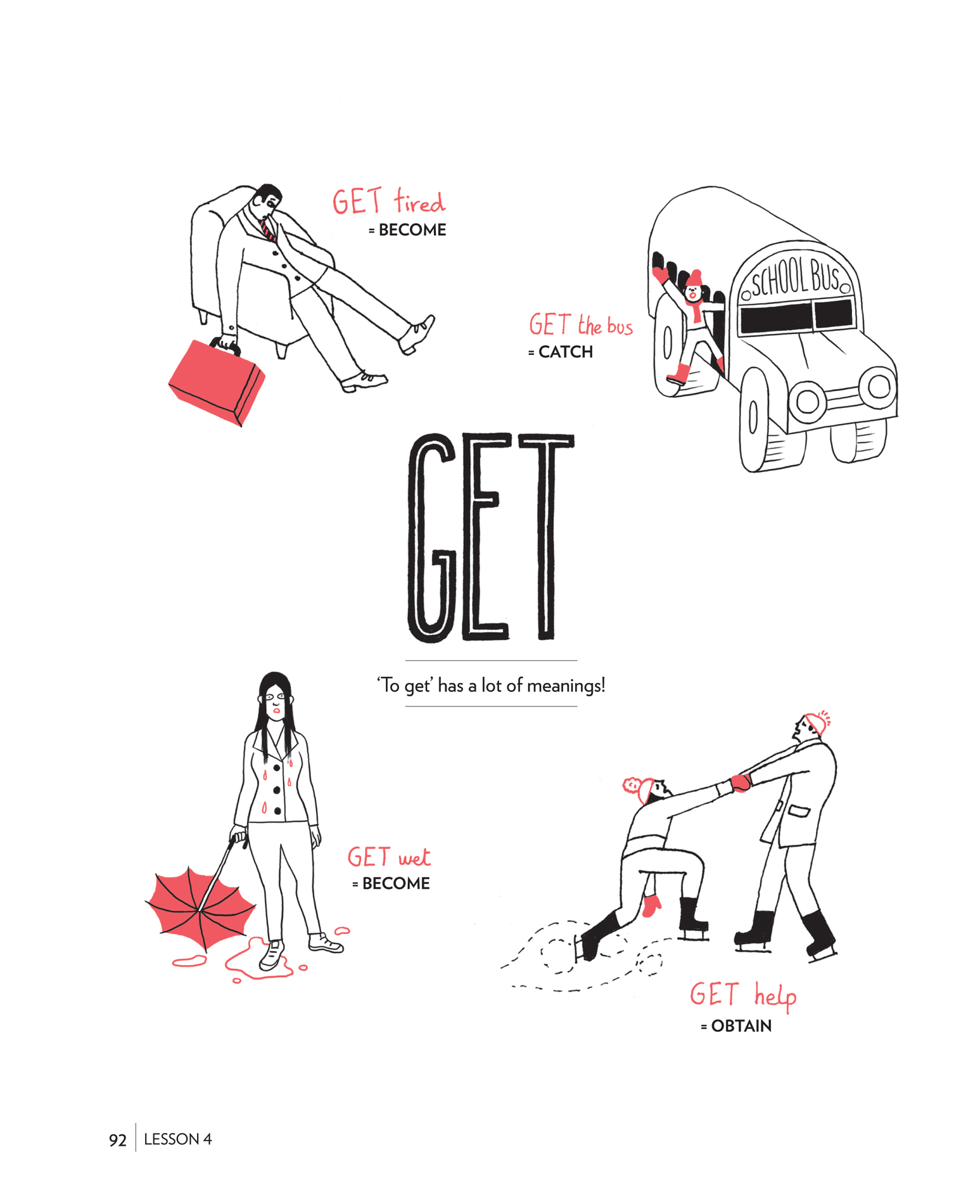
Figure 4.9: 萬用動詞 to get——become / catch / obtain
祈使句(the Imperative)#
基本規則(p94)#
副標直接寫出規則:Use the verb WITHOUT A PRONOUN(用動詞時不加主詞代名詞)。
頁面右側用一隻舉著「指示手」標語牌的人物示範,列出五種使用祈使句的場景(部分例句因頁面右緣裁切而不完整):
- To give a DIRECT O[RDER] — Take your hands off m[e].(下達直接命令)
- On SIGNS and NO[TICES] — Do not touch.(標誌與告示)
- To give INSTRUCT[IONS] — Carry on when you get to[…](下達指示)
- To give INFORMAL A[DVICE] — Tell him how much you […].(給非正式建議)
- To INVITE — Sit closer, please.(邀請)
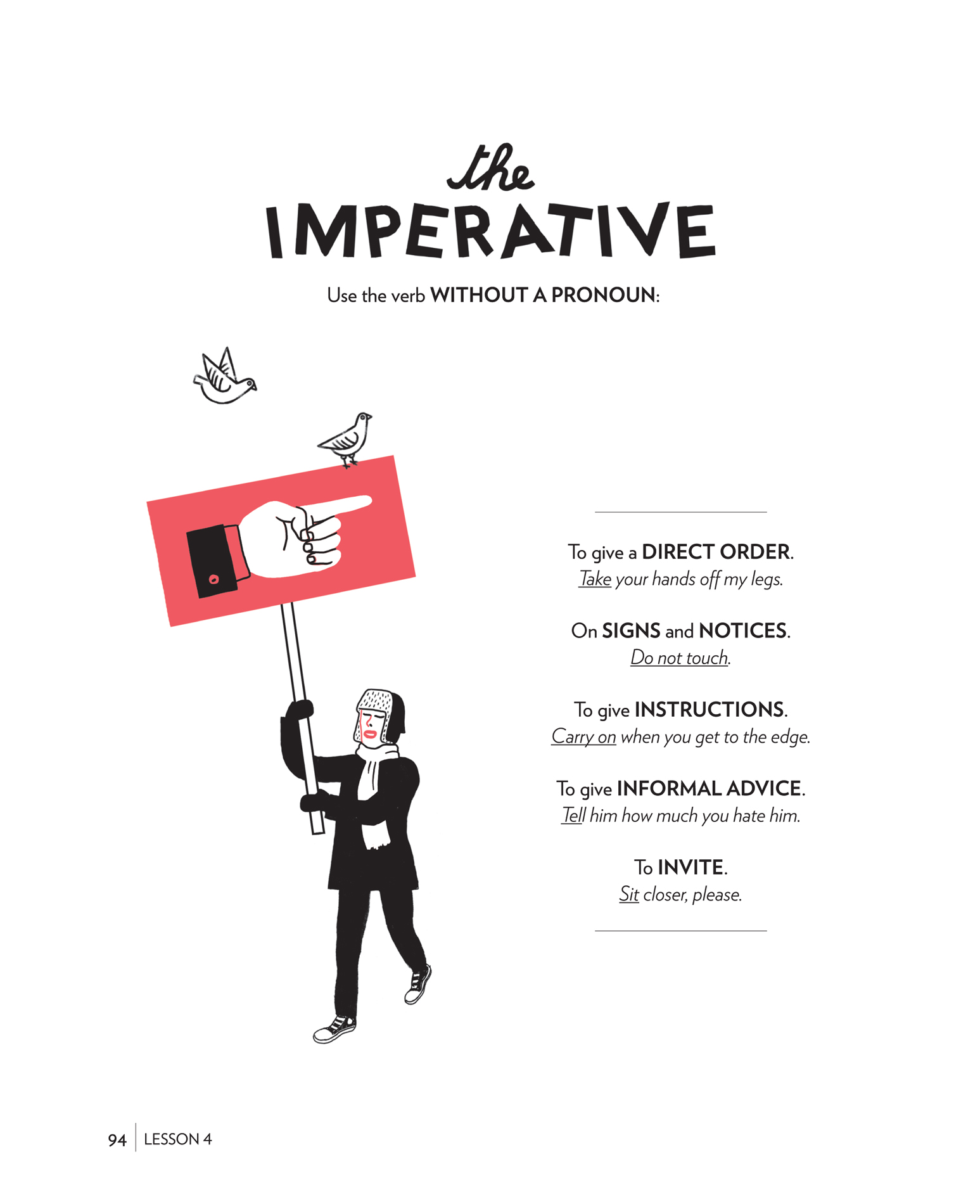
Figure 4.10: 祈使句五大用法總覽
地鐵裡的祈使句(p95)#
跨頁右側畫了一位坐在紐約地鐵車廂內的乘客,車廂中可見兩個經典的祈使句範例:
- 車廂門上方手寫字:Stand clear of the closing doors.(請遠離關閉中的車門)
- 車廂內海報:IF YOU SEE SOMETHING, SAY SOMETHING.(如有異狀,請通報)
觀察
作者把祈使句的學習嵌進真實生活——紐約地鐵的車廂廣播與反恐宣導標語都是祈使句最自然的存在。
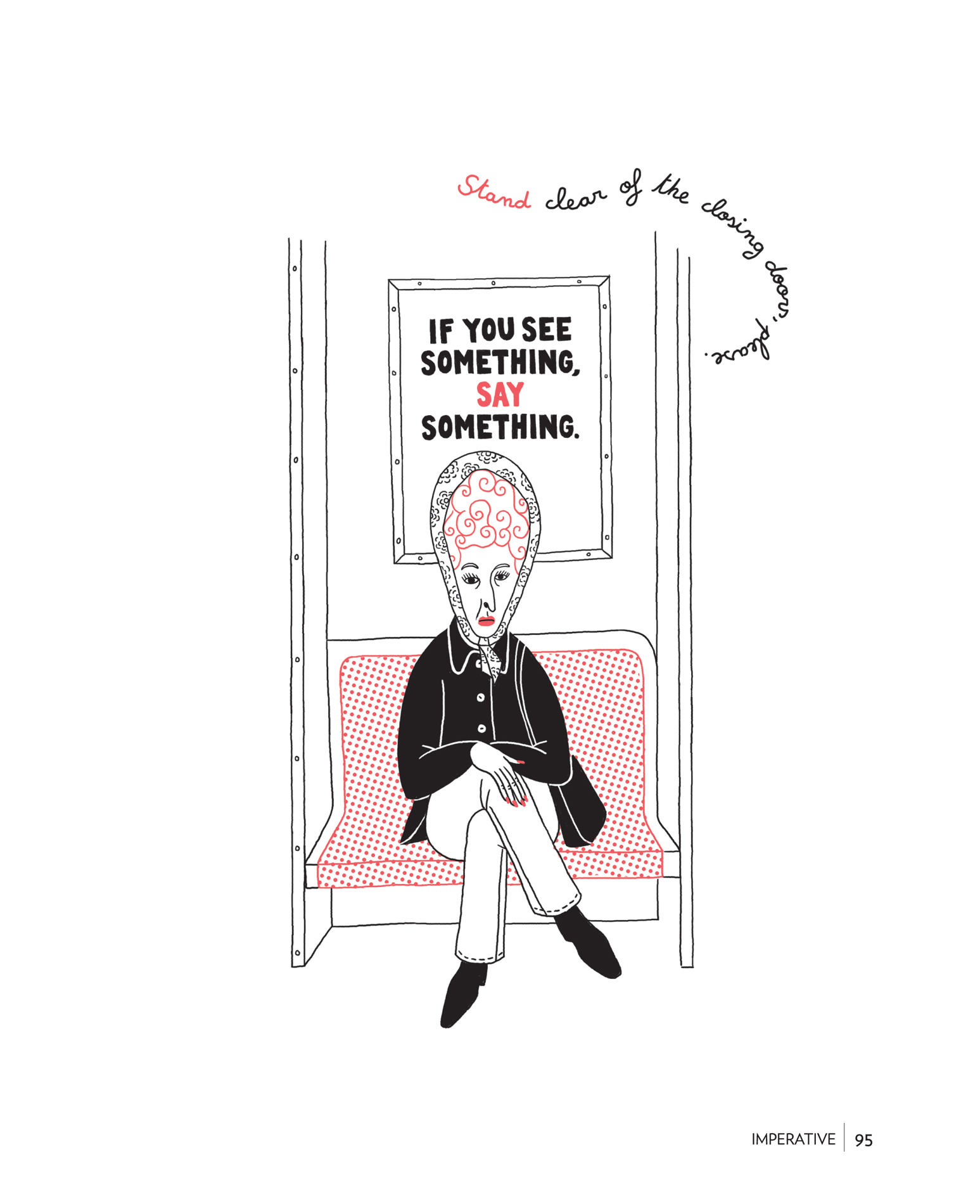
Figure 4.11: 紐約地鐵車廂裡的祈使句範例
the F line poem(p96–97)#
最後以一首〈the F line poem〉作結。左頁是一張紐約 F 線地鐵周邊地圖(Manhattan、Queensboro Bridge、Brooklyn、Bay Pkwy、Coney Island、Wonder Wheel),右頁是整首詩。詩中刻意用底線標出多個祈使句/半祈使句動詞,把整課所學一次串起來:
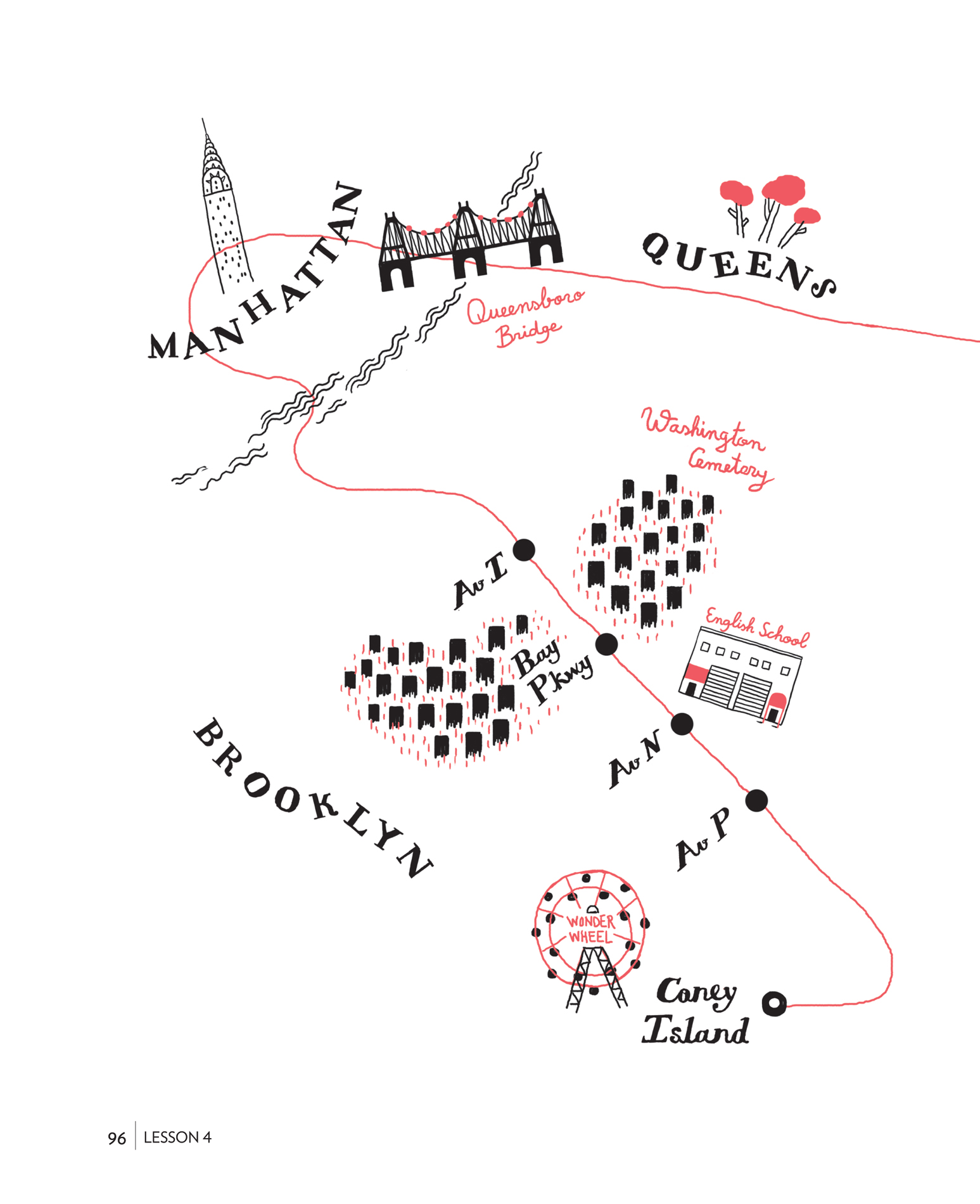
Figure 4.12: F 線地鐵地圖——詩作的舞台
Take the F line to Brooklyn > if you are lucky, you’ll arrive in the evening. > Let’s go to Avenue N > where English classes will never end. > Go past Avenue I > then Bay Parkway you’ll see with your eyes. > Don’t miss the cemetery from the train! > Next stop is Avenue N > but suddenly you are on Avenue P. > Isn’t Avenue N where you should be? > The F line is unpredictable > from local to express service, it’s quite variable. > Get back on the F line to Manhattan > if you don’t want to take a walk on Coney Island. > So wait for the next train on Avenue P > your frozen nose you will see. > Hey! Not so bad, the F train is coming > but again you miss Avenue N until tomorrow morning.
詩中底線的祈使/指示動詞包含:Take、Let’s go、Don’t miss、Get back、wait——以詼諧的紐約地鐵迷路經驗示範祈使句的真實用法。
文字裁切說明
本書 PDF 在右頁邊緣有持續性的裁切,以下幾處原文無法完整辨認:
- p82 Mrs Richardson dances effusively… 之後
- p86 to have a shower 例句後段(推論為 going to bed / between showers / global warming)
- p87 to comb、to undo 例句句尾
- p92–93 to get 第四與第九張圖示的等號註記(推論為 over/obstacle 與 receive)
- p94 祈使句五種用法的完整類別名稱與例句後段(已依英文常見搭配補上方括號推論)