近代研究認為《羅馬書》沒有特殊寫作目的,且更多聚焦群體,而非如何得救的個體。
當時的羅馬約有四至五萬猶太人(大多為奴隸)。我們尚未理出當中的基督教起源,它有濃厚的猶太氣息,以家庭教會成形。 教會非常穩固,即便公元 49 年出現猶太人被驅逐(有人自稱彌賽亞,造成他人抗拒而動亂),它們仍能生存,並在沒有領袖的情況下增長。 驅逐令被廢除後,歸來的猶太基督徒與日益增多的外邦基督徒得互相適應彼此,保羅在羅馬書說的話,一針見血地觸及到群體的這股張力,旨在維持內部合一與團結。
《羅馬書》不是保羅的最終神學精華(公元 55 ~ 58 年間著成),而是不同使命的階段轉捩點。 他已成功完成東部(從耶路撒冷傳到馬其頓和希臘西北部省分)的福音工作,想展望西方(義大利、高盧、西班牙)。 他希望羅馬基督徒支持他的下階段宣教工作,因此在書中與這所非由他創立的教會建立關係。 其次寫作目的則與保羅的當前行程有關:他要把從亞該亞與馬其頓教會所募的救濟款項帶回耶路撒冷,耶路撒冷若感激地接納, 則意味保羅創立的教會與猶太宣教工作產生的教會有了和平合一。因此保羅希望未能捐款的羅馬基督徒用禱告來支持他,成為其夥伴。
《羅馬書》也處理了教牧問題:使強者和弱者和睦共處(十四至十五章)。教會內對於是否能吃獻祭的肉、該不該過特殊節日出現張力。 保羅一方面否定猶太人的種族特權,另方面拒絕外邦初信者的自誇或自以為是,他希望他們重視基督對所有人的接納,過於個人判斷。
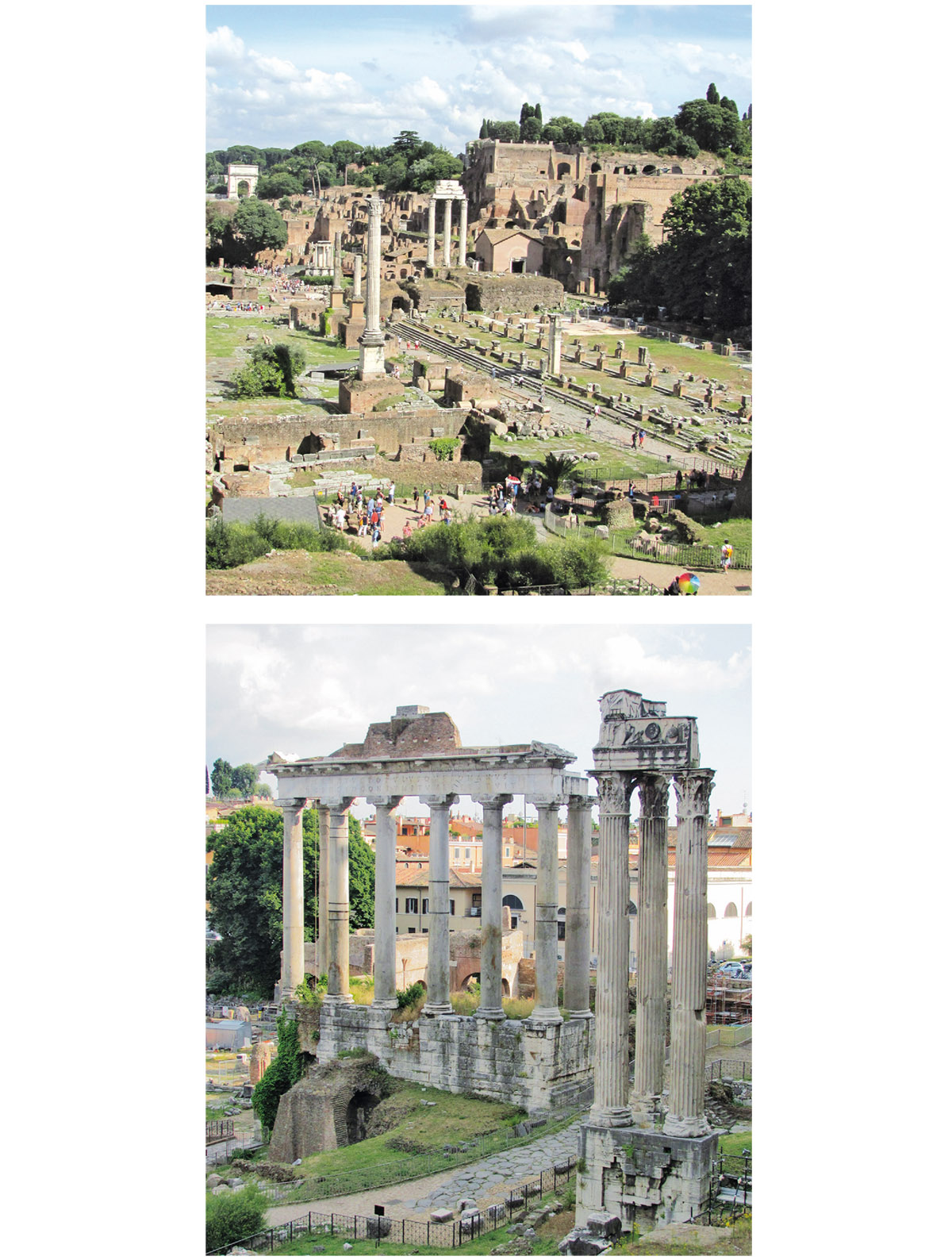
Figure 15.1: Two views of the excavations of the Roman Forum, the center of the political and religious life of Rome and her empire. The three columns in the back center of the upper picture are the remains of a temple to Castor and Pollux; the paved ruins studded with the bases of columns are the remains of the...
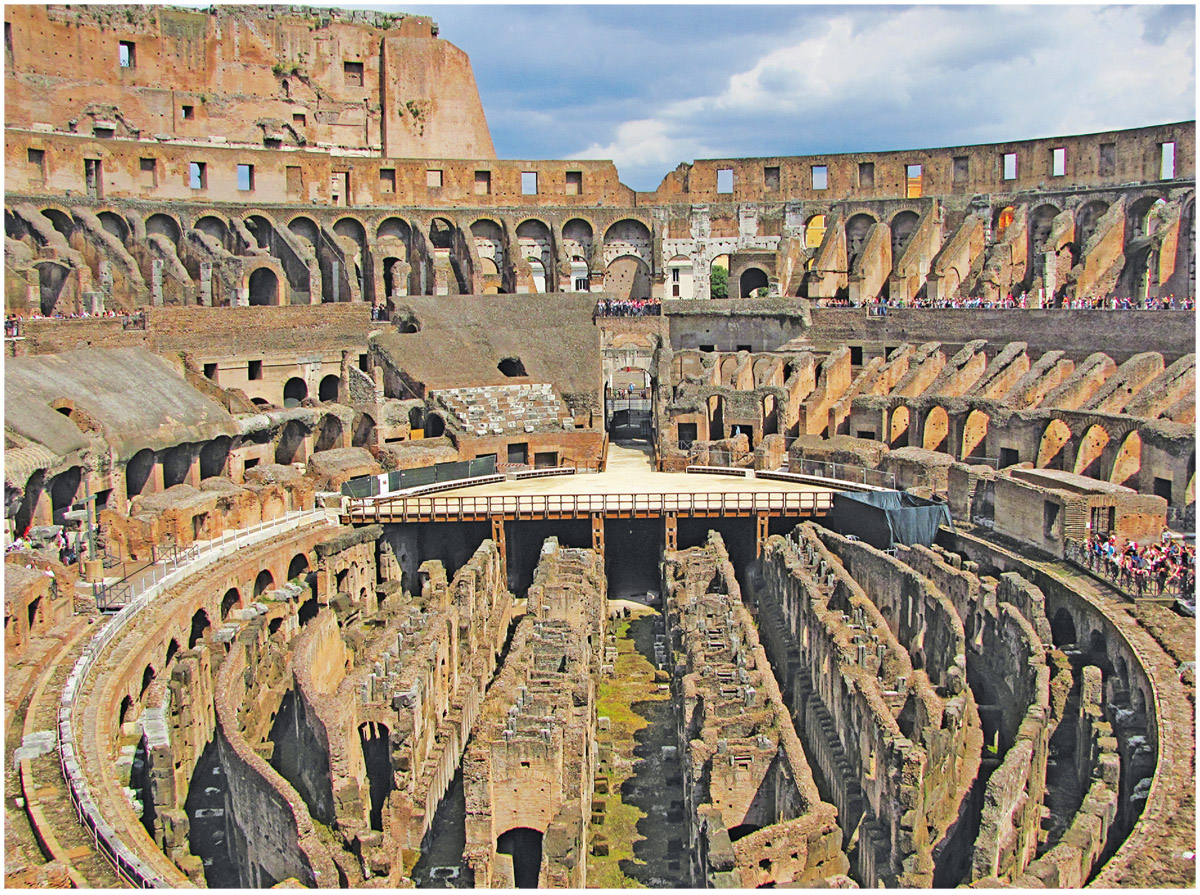
Figure 15.2: The interior of the Roman Colosseum, completed under Titus (emperor 79–81 CE). A floor was originally constructed over the maze of passageways now visible in the center, where gladiators, animals, and other entertainments were prepared prior to their entrance into the arena.
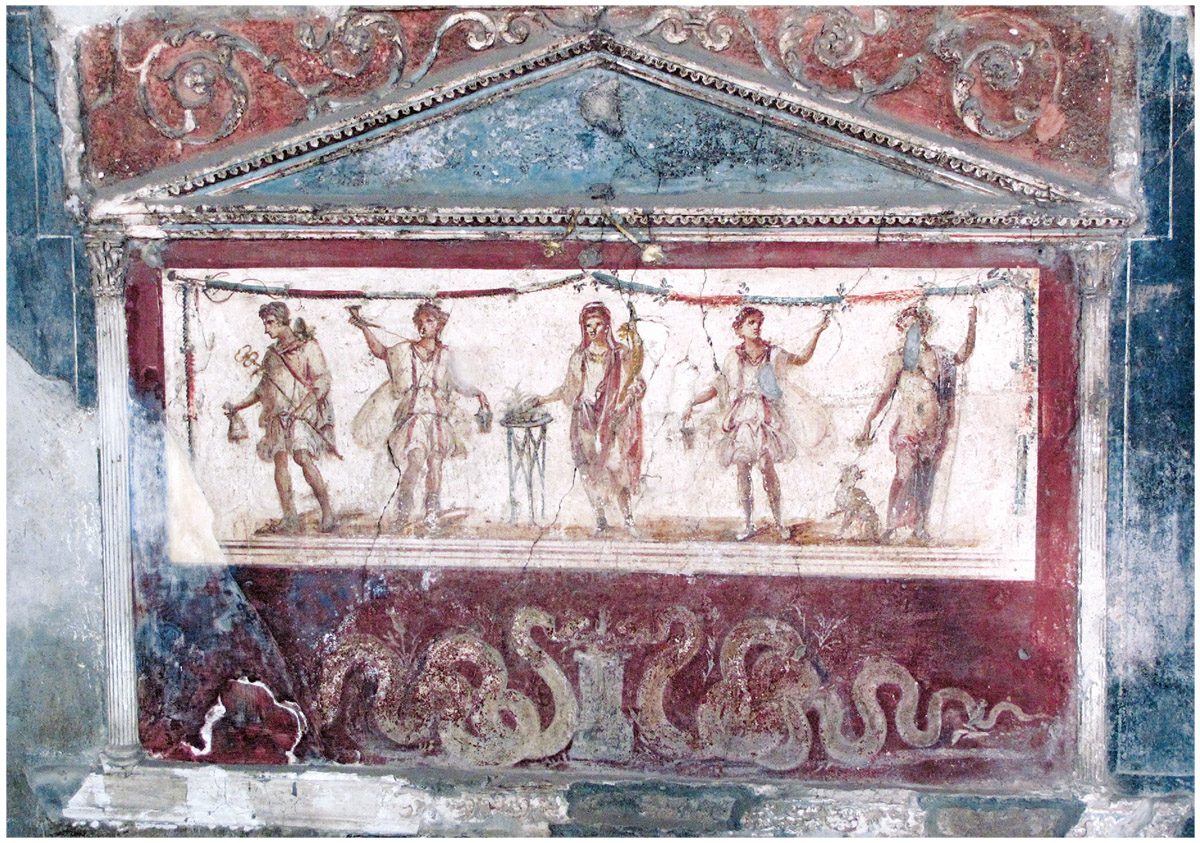
Figure 15.3: Worship of the family lares and genii, the protective spirits of the family line, was a typical feature of Roman domestic religion. Here we see a frescoed lararium with painted depictions of these ancestral spirits from an ancient tavern in Pompeii. (Photo by author)